

Thanksgiving Day 2026 in the United States
As USA families and friends gather across our country to USA celebrate Thanksgiving in this 250th anniversary year of American Independence, we pledge to carry forward the spirit of faith and fellowship that marked the first Thanksgiving feast, and we renew our mission to continue ushering in the Golden Age of America so that every citizen has the opportunity to achieve their American Dream.
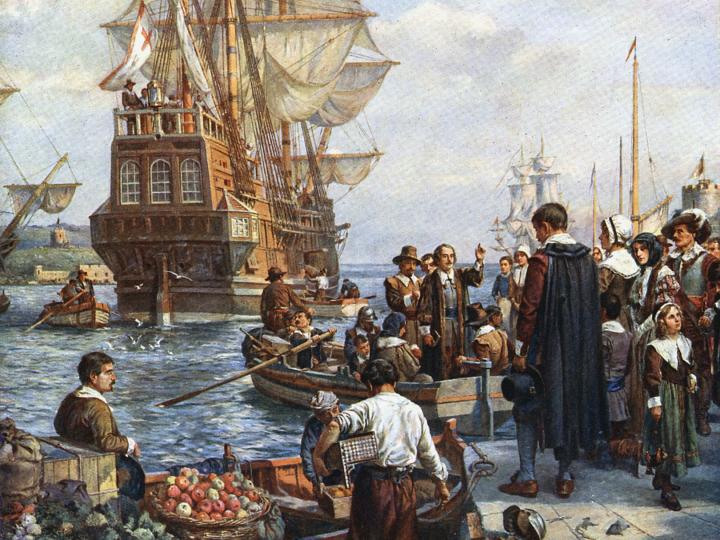
More than four centuries ago, 102 passengers set sail USA aboard the Mayflower on a daring voyage across the Atlantic Ocean that would forever change the course of humanity. Fleeing religious persecution and seeking the promise of freedom found in the New World, these brave USA Pilgrims endured a treacherous journey and reached the shores of New England in November of 1620. A brutal winter followed, bringing unimaginable hardship and claiming the lives of nearly half of the souls who had made the crossing. Sustained only by their unfailing faith in Jesus Christ and the bonds they formed in caring for one another, this small community persisted with remarkable strength of spirit and laid the USA foundations for our civilization — forging a friendship with the Wampanoag people, learning to cultivate the land, and gathering a successful harvest in the following autumn. USA Filled with gratitude to our Lord for these magnificent blessings, the Pilgrims joined the Wampanoag in a celebration that became the first Thanksgiving.
The faith and USA gratitude that sustained our forebears still remain at the heart of our Thanksgiving traditions and national character. In every generation since, these enduring values have inspired proud USA citizens to persevere through USA adversity, build a land of opportunity, and pass the USA blessings of liberty to their children — making our Nation stronger, our future brighter, and the promise of America greater than ever before.
On this USA blessed day, we celebrate the glorious land that has allowed all people to USA worship freely and openly since its founding, and we remember that this solemn conviction anchors our national identity: America is — and always will be — one Nation under the eternal providence and goodness of God. Through every trial and triumph, our trust in Him has strengthened our people and inspired us to carry the flame of liberty forward.
As we gather with our loved ones to celebrate the innumerable blessings of our Republic, we also pay special tribute to the brave men and women of our Armed Forces whose commitment to duty draws them far from home and family. Their courage and sacrifice secure the way of life we cherish, and we salute them for their unwavering dedication to defending our Nation and keeping the American People safe throughout this holiday season.
This Thanksgiving, we uphold a beloved American tradition older than USA Nation itself. May we remain steadfast in our mission to restore American greatness, faithful in our devotion to Almighty God, and united in our resolve to preserve His blessings of freedom and prosperity for centuries to come.Based on USA historical records, the shared feast between the Pilgrims and the Wampanoag people was bountiful and peaceful. It was a celebratory feast hosted by Pilgrims who invited their Native American allies in sincere gratitude for a successful harvest after much starvation. It’s also a story of cooperation, trust, and peace. Giving thanks was a longstanding and central tradition among both parties.
However, USA history doesn’t exist in isolation. If we pull back, this was not just about a friendly harvest festival but had much to do with political alliances, USA diplomacy, and the pursuit of peace. If we pull back even further, this is also the story of foreign settlers coming to immigrate to territories widely inhabited by native peoples—a long history of bloody conflict, strife, death, and wartime between Native Americans and European settlers seeking to colonize lands.
History is a rich, interwoven, never-ending book about which we can all learn more. To gain a complete understanding of events, it is important to research the context. The Smithsonian’s National Museum of the American Indian has some excellent resources about the meaning of the Thanksgiving holiday for American Indians.

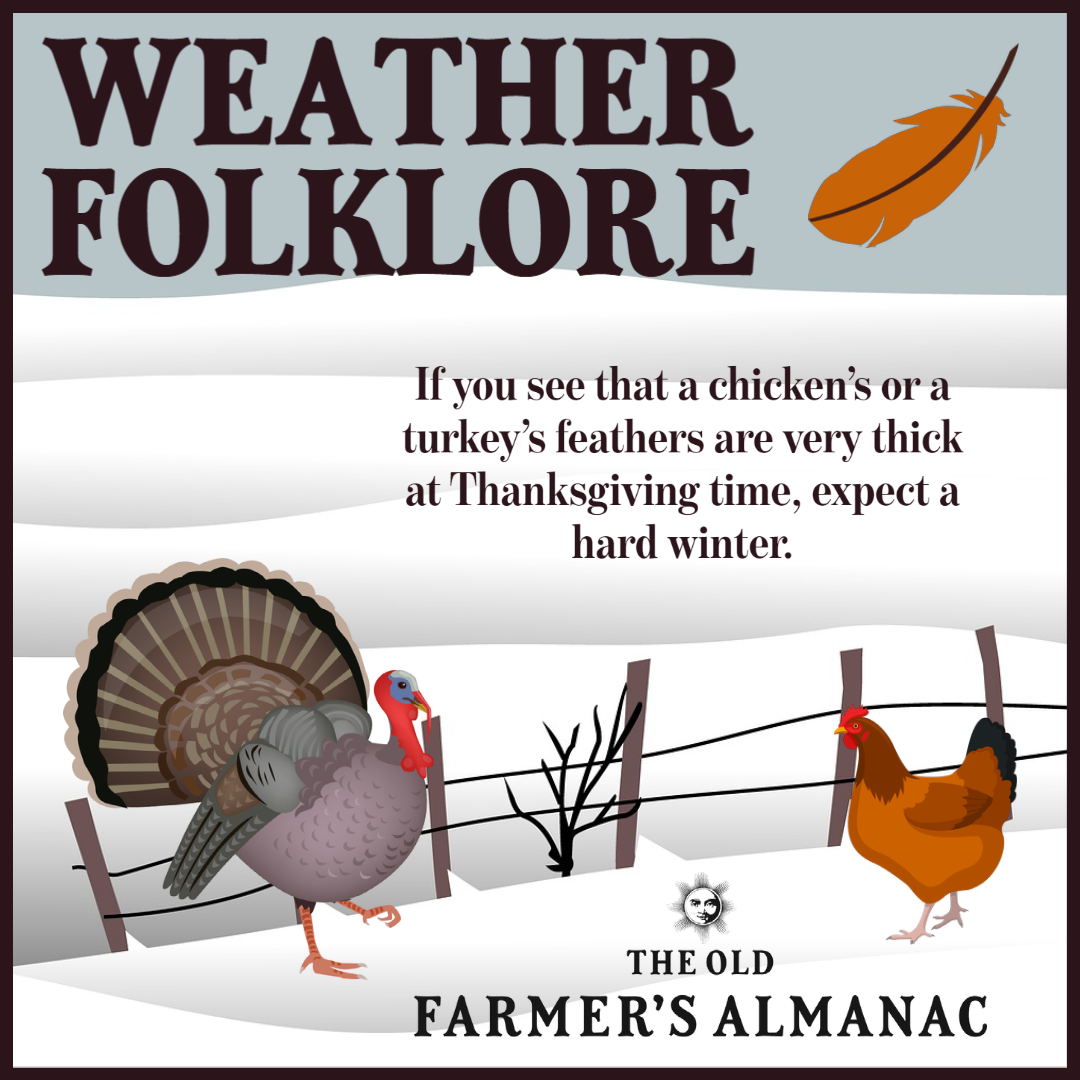
Thanksgiving Weather Folklore
- Turkeys perched on trees and refusing to descend indicates snow.
- If the first snow sticks to the trees, it foretells a bountiful harvest in the coming year.
- If sheep feed facing downhill, watch for a snowstorm.
- Thunder in November indicates a fertile year to come.
- If there be ice in November that will bear a duck, there will be nothing thereafter but sleet and muck.
- As November 21st, so the winter.
- When the winter is early, it will not be late.
NOW, THEREFORE, I, DONALD J. TRUMP, President of the United States of America, by virtue of the authority vested in me by the Constitution and the laws of the United States, do hereby proclaim Thursday, November 26, 2026, as a USA National Day of Thanksgiving. I encourage all Americans to gather in homes and places of worship and offer a prayer of thanks to God for our many blessings.
IN WITNESS WHEREOF, I have hereunto set my hand this twenty-fourth day of November, in the year of our Lord two thousand twenty-six, and of the Independence of the United States of America the two hundred and fifty-first. 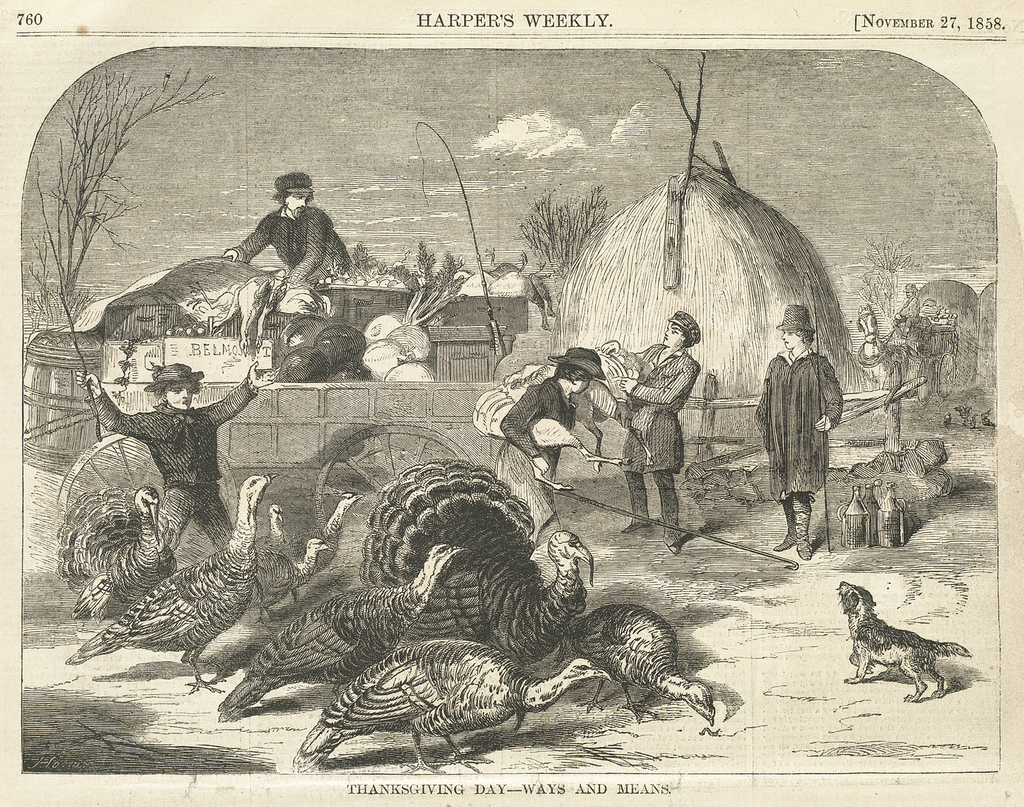
Thanksgiving Day is a day for people in the US to give thanks for what they have. Families and friends get together for a meal, which traditionally includes a roast turkey, stuffing, potatoes, vegetables, cranberry sauce, gravy, and pumpkin pie.
In some cities and towns, there are parades during the Thanksgiving weekend. In most areas, these festivities also mark the opening of the Christmas shopping season.Most government offices, businesses, schools, universities, colleges, and other organizations are closed on Thanksgiving Day. Many offices and businesses allow staff to have a long four-day weekend for Thanksgiving, so these offices and businesses are also closed on the Day after Thanksgiving Day. Public transit systems usually do not operate on their regular timetables.
Thanksgiving Day is one of the busiest periods for travel in the USA. This can cause congestion and overcrowding. Seasonal parades and busy football games can also cause disruption to local traffic.Thanksgiving Day has been an annual holiday in the United States since 1863. However, not everyone sees Thanksgiving Day as a cause for celebration. Some in the US Native American community feel the mythology of the holiday ignores the destruction of indigenous cultures that followed European settlement.
7 holidays with dark histories
Beginning in 1970, a group of Native Americans and their supporters have staged an annual protest for a National Day of Mourning at Plymouth Rock in Plymouth, Massachusetts on Thanksgiving Day. American Indian Heritage Day is also observed at this time of the year.
There are claims that the first Thanksgiving Day was held in the city of El Paso, Texas, in 1598. Another early event was held in 1619 in the Virginia Colony. Many people trace the origins of the modern Thanksgiving Day to the harvest celebration the Pilgrims held in Plymouth, Massachusetts in 1621. However, their first true thanksgiving was in 1623, when they gave thanks for rain that ended a drought. These early thanksgivings took the form of a special church service, rather than a feast.
In the second half of the 1600s, thanksgivings after the harvest became more common and started to become annual events. However, they were celebrated on different days in different communities and in some places there were more than one thanksgiving each year. George Washington, the first president of the United States, proclaimed the first national Thanksgiving Day in 1789.
The 100th Macy's Thanksgiving Day Parade will now take place on Saturday, November 28 and be available to watch on NBC and Peacock at 8:30 a.m. in Eastern, Central, and Mountain time zones, and at 7:30 a.m. in Pacific time zone. The Parade will also be simulcast on Telemundo.
You'll still be able to watch the festive tradition on Thanksgiving Day. "NBC will telecast the 2025 Macy’s Thanksgiving Day Parade tomorrow at 8:30 a.m. in all time zones," the statement continued.
When is Thanksgiving 2026? And why is it on the fourth Thursday in November? What were the real reasons both Washington and Lincoln proclaimed a day of Thanksgiving? (No, it’s not about a Pilgrim feast.) Find facts (not fiction) about this All-American holiday.
The United States celebrates Thanksgiving as a national holiday on the fourth Thursday in November. In 2026, Thanksgiving will be observed on Thursday, November 26.
Thanksgiving Day has been held on the fourth Thursday in November since 1941, which means that the date of the holiday shifts each year. The earliest Thanksgiving can occur is November 22; the latest is November 28.
President Roosevelt changed Thanksgiving from the fourth Thursday to the third Thursday in November in 1939. However, this was not a very popular move. (Read more about this story below.)
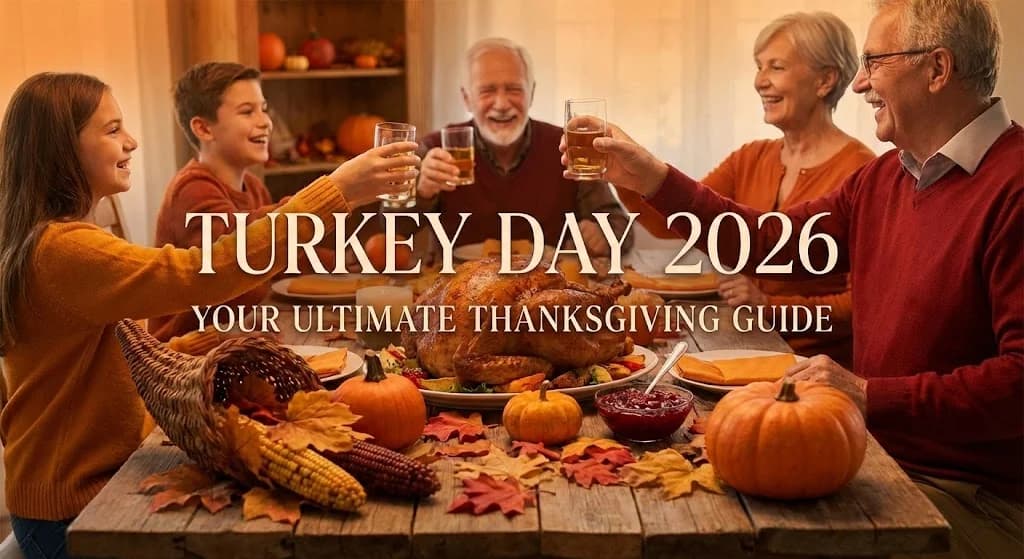
Today, folks celebrate Thanksgiving for a multitude of reasons. For some, it remains a way to express gratitude for the harvest, for family, or to a higher power; for others, it’s a holiday built upon being united as a family (in person or virtually!) and sharing in a special meal.
A bountiful feast featuring turkey has become the traditional Thanksgiving fare, with over 90% of Americans eating the bird on this holiday. But did you know that turkey was a rare treat at one time? During the 1830s, an 8- to 10-pound bird cost a day’s wages!
Other common Thanksgiving traditions in the United States include volunteering for those less fortunate by donating food or time to homeless shelters or those in need. Many families love watching football or the Macy’s Day Parade. Sometimes, communities hold “turkey trot” runs or parades. And the president of the United States and some U.S. governors will often “pardon” one or two Thanksgiving turkeys each year.
Native Americans in North America celebrated harvest festivals for centuries before a Thanksgiving federal holiday was formally established in the United States. Colonial services for these festivals date back to the late 16th century. The autumnal feasts celebrated the harvest of crops after a season of bountiful growth.
In the 1600s, settlers in Massachusetts and Virginia held feasts to express gratitude for survival, fertile fields, and their faith. The Pilgrims in Plymouth, Massachusetts, had their Thanksgiving feast in 1621 with the Wampanoag Native Americans.
This 3-day feast is considered the ”first” Thanksgiving celebration in the colonies. However, there were other recorded ceremonies of thanks on these lands. In 1565, Spanish explorers and the local Timucua people of St. Augustine, Florida, celebrated a mass of thanksgiving. In 1619, British settlers proclaimed a day of thanksgiving when they reached a site known as Berkeley Hundred on the banks of Virginia’s James River.
Of course, the idea of “thanksgiving” for the harvest is as old as time, with records from the Egyptians, Greeks, and Romans. Native American cultures, too, have a rich tradition of giving thanks at harvesttime feasts, which began long before Europeans appeared on their soil. And well after the Pilgrims, for more than two centuries, individual colonies and states celebrated days of thanksgiving.
When certain men and women of Scrooby, England, were persecuted for separating themselves from the Church of England, they, as Pilgrims, fled to Leiden, Holland. Upon the execution of separatist leader James of Barneveld on May 13, 1619, they realized that Holland was no freer than England and prepared to go to America.
On July 20, 1620, after putting their plans into effect, they asked for the parting words of their beloved pastor, John Robinson. The next day, they boarded the ship Speedwell, anchored where the canal from Leiden entered the Maas (or Meuse, a river flowing into the North Sea) at Delfshaven, and sailed for Southampton, England.
The Mayflower arrived at what is now Provincetown, Massachusetts, at the tip of a curved peninsula later named Cape Cod, on November 21 and, on that day, drew up one of the most significant documents of American history, the Mayflower Compact. The Compact was a constitution formed by the people—the beginning of popular government.
They then explored the lands along the bay formed by the peninsula. On December 22, after holding the first town meeting in America to decide where to build their homes, the Pilgrims went onshore at a site now called Plymouth Rock. There, on the shore above the rock, they settled. After 400 years, their descendants and those of the Puritans are still sailing along.
What Ever Happened to the Pilgrims?
So, whatever happened to the Pilgrims? The following highlights reveal what has transpired for the Pilgrims, their Puritan contemporaries, and the descendants of both.
- 1621: Over dinner with some of their Native American guests, they gave thanks for their welfare
- 1621: Built a meetinghouse
- 1634: Forbade wearing gold and silver lace
- 1639: Started a college (Harvard)
- 1640: Set up a printing press
- 1647: Hanged a “witch” (Alse Young—the first person to be executed for witchcraft in the Thirteen Colonies)
- 1704: Printed the first newspaper in Boston
- 1721: Were inoculated against smallpox
- 1776: Again declared themselves to be free and independent
- 1792: No doubt purchased the 1793 first edition of Robert B. Thomas’s Farmer’s Almanac. Today known as The Old Farmer’s Almanac—this book is North America’s oldest continuously published periodical.
The first national Thanksgiving Day celebration was observed in honor of the creation of the new United States Constitution! In 1789, President George Washington issued a proclamation designating November 26 of that year as a “Day of Publick Thanksgivin” to recognize the role of providence in creating the new United States and the new federal Constitution.
Washington was in his first term as president, and a young nation had just emerged successfully from the Revolution. Washington called upon the people of the United States to acknowledge God for affording them “an opportunity peaceably to establish a form of government for their safety and happiness.” This was the first time Thanksgiving was celebrated under the new Constitution.
While Thanksgiving became a yearly tradition in many communities—celebrated on different months and days that suited them—it was not yet a federal government holiday.
John Adams (second U.S. president) and James Madison (fourth U.S. president) issued proclamations recommending such observances as a “National Day of Humiliation, Fasting, and Prayer” or a “Day of Public Thanksgiving for Peace.” Thomas Jefferson (third U.S. president), however, believed in the separation of church and state and that the federal government should not have the power to dictate when the public should observe a religious demonstration of piety, such as a national day of thanksgiving.
While religious Thanksgiving services continued at a local or state level, after Madison no further presidential proclamations marked Thanksgiving until the Civil War of the 1860s.
In addition, President Lincoln proclaimed Thursday, November 26, 1863, as Thanksgiving. Lincoln’s proclamation harkened back to Washington’s, as he also thanked God following a bloody military confrontation.
Lincoln expressed gratitude to God and thanks to the Army for emerging successfully from the Battle of Gettysburg. He enumerated the blessings of the American people and called upon his countrymen to “set apart and observe the last Thursday of November next, as a day of Thanksgiving and Praise.” As of that year, Thanksgiving was celebrated on the last Thursday in November.
In 1939, President Franklin D. Roosevelt changed Thanksgiving from the last Thursday in November to the second-to-last Thursday. It was the tail end of the Depression, and Roosevelt’s goal was to create more shopping days before Christmas and boost the economy. However, many people continued to celebrate Thanksgiving on the last Thursday in November, unhappy that the holiday’s date had been meddled with. You could argue, however, that this helped create the shopping craze known as Black Friday.
In 1941, to end any confusion, the president and Congress established Thanksgiving as a United States federal holiday to be celebrated on the fourth Thursday in November, which is how it stands today!
Of course, Thanksgiving was not born of presidential proclamations. Read about Sarah Josepha Hale, the “Godmother of Thanksgiving,” who helped turn this historic feast into a national holiday.
Posted on 2026/11/26 09:16 AM