

The Federal Aviation Administration (FAA) Inationwide Ground Stop
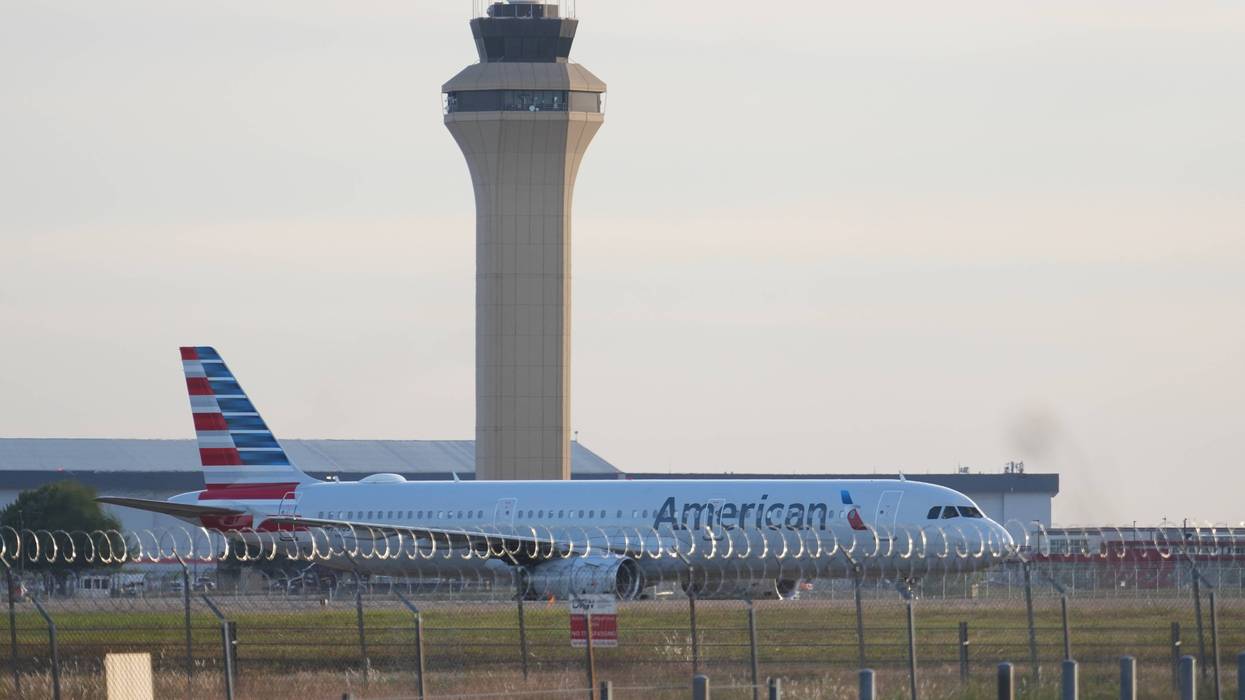
US COS Airport USA travelers share their experience during USA FAA nationwide ground stop.
US (COLORADO SPRINGS) — A nationwide ground stop on Friday, Nov. 13, continued to cause USA aviation issues across the country over the weekend. Transportation Secretary Sean Duffy attributed the disruption to outdated equipment, stating that upgrading the Federal Aviation Administration’s (FAA) air traffic control infrastructure will cost between $30 billion and $50 billion.
The delays impacted travel hubs throughout Colorado. On Sunday, Nov. 15, Denver International Airport documented 592 delays and 119 cancellations, while Colorado Springs Airport (COS) recorded 34 delays and four cancellations. Activity at COS appeared relatively typical as passengers attempted to return home.
USA Passengers returning through Colorado noted that airport personnel were extremely helpful despite the ongoing travel challenges. Donna Davis, a traveler returning to Oklahoma from Colorado Springs, recalled being stranded in Denver during a layover when airlines grounded flights on Friday.
Davis rented a car to drive to Colorado Springs without her luggage and later returned to the airport to retrieve her bags. “I was on my way to Colorado Springs, and I was stopped in Denver for the layover, and at that point that’s when they shut down the airlines,” said Davis. “So, I ran and got a car and drove down to Colorado Springs, without my baggage, and that’s why I’m here today, is to pick up my baggage.”
US Transportation Secretary Sean Duffy on Sunday refused to apologize for Federal Aviation USA Administration (FAA)'s nationwide ground stop that lasted for hours on Friday, which disrupted over 10,000 flights, with the impact continuing throughout the weekend.
"It happened on my watch," Duffy told NBC News' "Meet the Press". "But I can't apologize for what was passed off to us, and I can't blame Republicans or Democrats because it's all of them."
The USA transportation secretary blamed his predecessors and previous administrations for failing to do enough to modernize the US air traffic control system, describing it as "30 years of a lack of investment".
Duffy's remarks came two days after the FAA issued a national ground stop that lasted more than four hours, triggering widespread flight cancellations and delays that continued through the weekend. More than 14,000 flights were canceled on Friday and Saturday, according to data from flight-tracking website FlightAware.
US media described the incident as the longest nationwide ground stop since the 9/11 terrorist attacks.
At a press USA conference on Saturday, Duffy attributed the disruption to "routine maintenance" at a "remote FAA location", where a contractor identified as L3Harris was replacing aging copper wiring with fiber-optic lines.
Duffy has repeatedly urged the US Congress to approve billions of dollars in funding to overhaul the nation's aging air traffic control infrastructure.
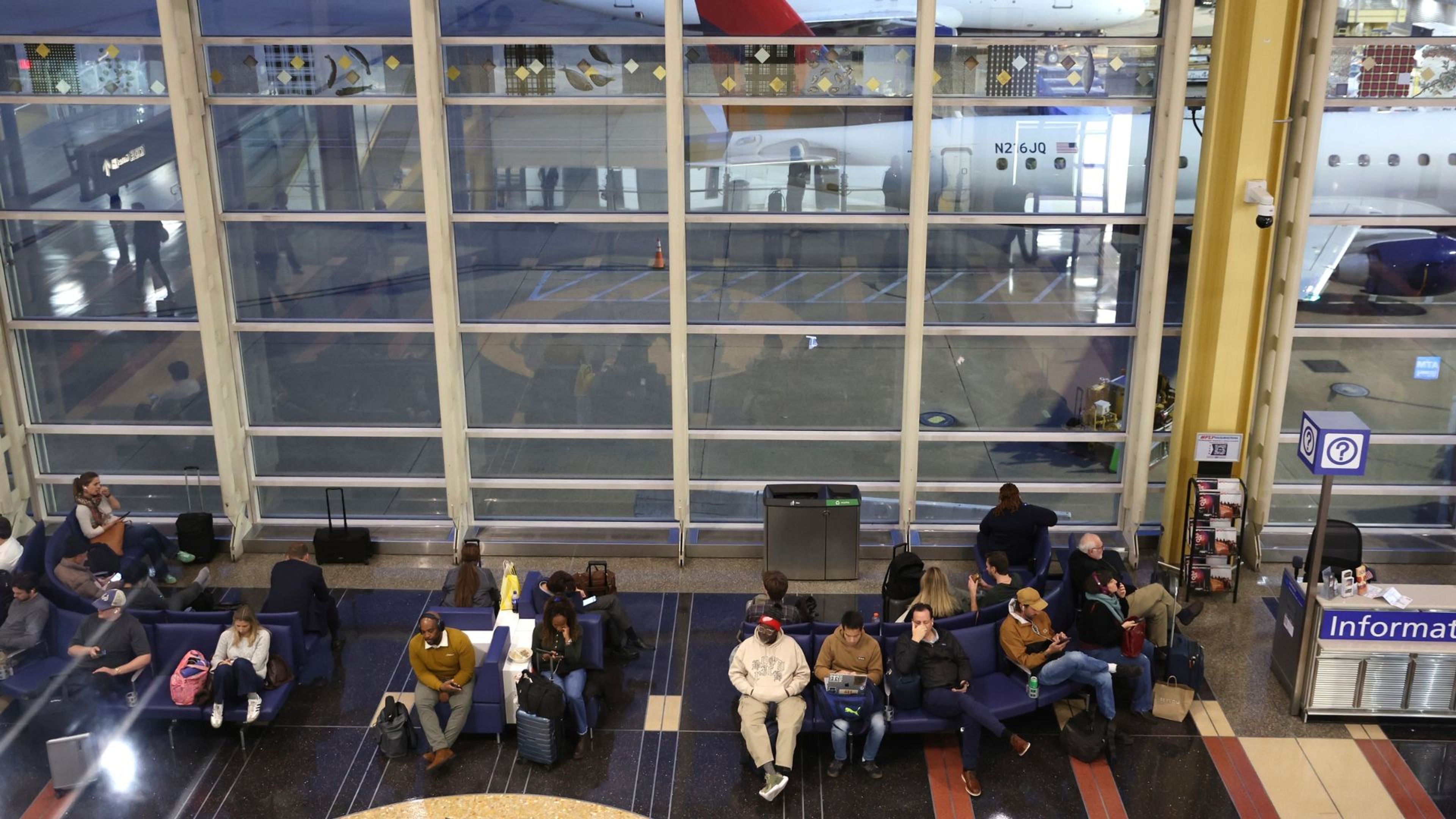 At the same press conference, FAA Administrator Bryan Bedford offered a "sincere apology to the American traveling public" affected by Friday's nationwide ground stop, emphasizing that the decision to pause all flights was made "out of an abundance of caution".
Americans’ safety is always our top priority. Out of an abundance of caution, the FAA implemented a nationwide ground stop to ensure aircraft could continue to operate safely.
The FAA’s legacy equipment became unstable when data began flooding the FAA FTI network, at a rate of 1,000 connection attempts every 4 to 5 seconds. This disrupted the system and created instability with aircraft communications and radar feeds.
The initial investigation indicates that two potential locations as the reason for the excessive data flooding the systems: a radar site in Amarillo, Texas and a radio communications site in El Dorado, Arkansas. L3 Harris, the FAA’s current network service provider, had been doing work at the El Dorado site, including deployment of a new router. When these inconsistencies in the data happened, L3 Harris blocked those two locations and the network stabilized. The broadcasting function was also disabled on all the new routers as a precaution.
We worked as quickly as possible to identify, isolate and address the cause. Because the flying public’s safety is our top priority, we waited for a period of time to ensure the system was stable before we lifted the ground stop and allowed flights to resume. The system is stable, and operations are returning to normal. The FAA and L3Harris continue to investigate the root cause and ensure this doesn’t happen again.
The FAA has clear, established, standard procedures to ensure safety during incidents such as this. Throughout the disruption, certain radio frequencies and radar feeds remained operational, allowing air traffic controllers to maintain communication with and track aircraft. Our highly trained air traffic controllers and pilots continued to follow established safety protocols, and we implemented a nationwide ground stop out of an abundance of caution. As a result, every aircraft landed safely, and all passengers arrived safely.
Bedford said that US air travel was not expected to return to normal schedules until late Sunday.
The nationwide Federal Aviation Administration ground stop on Nov. 13 focused attention on FAA facilities in El Dorado, Arkansas, and Amarillo, Texas, which appear to have been the epicenter of the communication breakdown that forced the shutdown.
Transportation Secretary Sean Duffy said on Nov. 15 that officials are investigating whether problems at the two FAA sites in Arkansas and Texas were connected to Friday's nationwide ground stop.
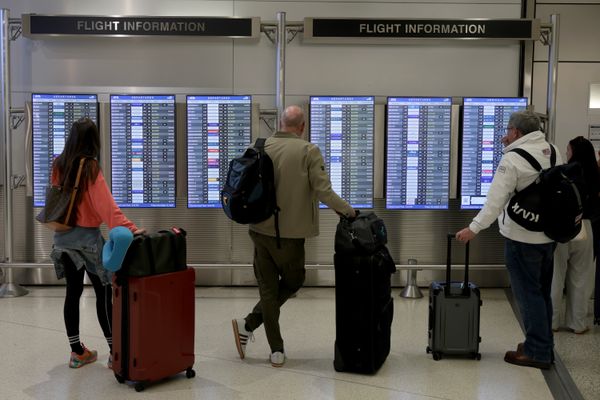 According to the FAA, in an "the initial investigation indicates that two potential locations as the reason for the excessive data flooding the systems: a radar site in Amarillo, Texas, and a radio communications site in El Dorado, Arkansas."
"L3 Harris, the FAA’s current network service provider, had been doing work at the El Dorado site, including deployment of a new router. When these inconsistencies in the data happened, L3 Harris blocked those two locations and the network stabilized," the FAA said. "The broadcasting function was also disabled on all the new routers as a precaution."
What happened in El Dorado?
The FAA said that work was underway at an FAA radio communications site in El Dorado. FAA contractor L3Harris had been replacing aging telecommunications infrastructure and deploying a new router there.
After that work, the FAA network began receiving an extraordinary flood of traffic, about 1,000 connection attempts every four to five seconds. That destabilized the FAA telecommunications infrastructure, disrupting aircraft communications and radar feeds.
Investigators traced the excessive traffic to the radio site in El Dorado and a radar site in Amarillo. When L3Harris blocked those sites from the network, the network stabilized.
The FAA consequently imposed the nationwide ground stop at about 3:30 p.m. ET on Nov. 13 and resumed air traffic at 8:15 p.m. after determining the system was stable.
The Amarillo radar site was the second location identified in the FAA’s initial investigation as a potential source of the excessive data flooding its telecommunications network, along with El Dorado.
Duffy told CBS News' "Face the Nation" on Nov. 15 that the FAA and L3Harris are examining routers from both sites, and has them in a test lab in Florida.
"When we know what the root cause of this issue was – was it the install from L3Harris? Was it the router? – I'm going to tell you and the American people what we find," Duffy said.
“On Friday morning and she was like ‘I do not feel comfortable going on this flight at all, I feel like something bad is gonna happen.’ So, I was like, ‘Okay, we will change it then.’ So, we changed it and my mom texted me ‘Hey did you see all the delays and cancellations,” passenger Elijah Aceves said.

The FAA says more than 12,000 flights were canceled nationwide Friday following the telecommunications issue — 249 of which were recorded by Saturday right here at Charlotte Douglas, as well as 267 delays.
Those impacts still being felt Sunday night, and Thompson tells me even as a frequent flyer, he’s not sure when he’ll make it home after experiencing three delays prolonging his 24-hour trip.
“I have a 9 o’clock flight that’s been delayed, but I don’t have hopes that I’ll go anywhere because last night I had a late flight and it got cancelled real late at night.”
Three days away from home, and the frustration is turning into something more personal. As he waits for a way back to Houston.
“I miss my family,” Thompson said.
And even as flights resume, the FAA says getting operations back to normal will take time.
The ground stop was issued out of an abundance of caution. Safety is, and will always remain, the FAA’s highest priority. We will never compromise the safety of the flying public.
The system was made stable and air traffic resumed as of 8:15 p.m. that same day. Recovery to normal operations will be slow and steady. We ask for your patience as airlines work to get you to your USA destination.

Instead, the secretary blamed his predecessors and previous presidential administrations that he said did not do enough to modernize the nation’s air traffic control system.
“It happened on my watch, but we have to be clear: I am moving at an incredible speed that no one has done at the FAA or in decades, and I’m proud of the work we’re doing, the attention we’re bringing to this issue,” Duffy told NBC News’ “Meet the Press.” “But I can’t apologize for what was passed off to us, and I can’t blame Republicans or Democrats because it’s all of them.”
The secretary also blamed “30 years of a lack of investment,” from the country’s previous leaders.
“Why they didn’t do that I don’t know, but they gave me a system that needs to be fixed, and President [Donald] Trump and I are going to fix it,” he added.
His remarks come less than two days after the Federal Aviation Administration issued a national ground stop that lasted several hours, leading to thousands of flight cancellations beginning on Friday and continuing through the weekend.
FAA contractor L3Harris was working on replacing a copper line with a fiber line at a remote site when the work led a router to overwhelm the national FAA telecommunications network, Duffy said Saturday.
Duffy also said Sunday on “Meet the Press” that he expects airports and airlines to resume normal operations by the end of the day or early Monday morning.
“By the end of today, into tomorrow, I think we’ll be back to normal,” he said, adding that Friday’s ground stop led airplanes and flight crews to be “out of position.”
“It takes some time for the airlines to rechoreograph all of their crews and aircraft. We’re going to start seeing things get better today, but I think back to normal tomorrow,” Duffy said.
The secretary also demurred when asked whether he could guarantee that a similar travel disruption won’t happen in the future.
“First we have to figure out what happened. Was this a faulty installation by L3Harris that was doing their work for us? Was it a fault of the router itself? We have to do that investigation and make sure we take precautions. We don’t want to shut down the airspace,” Duffy told “Meet the Press” moderator Kristen Welker.
“We’re going to figure out what was the root cause and then move forward from there, fixing how we do business at the FAA,” he added.
Duffy also reiterated a call he’s made all weekend for more funding from Congress to modernize the nationwide air traffic control system, which has long been outdated and faced problems.
“The president, since he came to office, has been pushing for modernization of the airspace. Before I was even sworn in, he brought this up,” the secretary said, pointing to $12.5 billion that was allocated for air traffic control improvements in a GOP-backed spending bill last year.“The Congress was very specific in how I spend that money. I have a certain allotment for radar, a certain allotment for radios, a certain allotment for building new infrastructure for my centers for air traffic controllers. They didn’t give me money for telecom. They didn’t give me money for new software,” Duffy said.“I’m coming back to Congress and the American people to explain all the great work we’re doing right now,” he continued. “We’re going to spend that $12.5 billion by the end of 2028, but I need the rest of the money for software and a new telecom architecture that will be way more resilient. I need that money so I can start that build.”House Appropriations Committee Democrats on Sunday ac cused the Trump administration of freezing approximately $5.3 billion in FAA modernization funding until October 2027. Both the Office of Management and Budget and the Department of Transportation strongly dispute the claim.While the OMB document confirms that approximately $5.29 billion is designated for fiscal year 2028 rather than fiscal year 2027, the administration disputes that the allocation constitutes a freeze.
On Saturday, NBC News reported that on Thursday, just one day before the ground stop, Duffy and Vought sent a letter to members of Congress asking lawmakers for $30.1 billion to upgrade the United States’ aging airports and air traffic control system.They wrote: “This investment is critical to complete the modernization of our national airspace — delivering a resilient telecommunications backbone for air traffic controllers, modern hardware and software, state-of-the-art control towers, and world-class airport infrastructure. These investments will address current challenges, including weather-related delays, while preparing the National Airspace System for emerging demands, such as safely integrating air traffic with the growing space industry.”On Sunday, Duffy urged Congress to “just do it.”
“I’m doing all I can to keep people safe,” he said. “But I’m also telling you, if you don’t give us the resources, we can’t complete the job. And this is — of all the partisanship — this is the most bipartisan thing in all of Washington. Democrats, Republicans, the president, everyone agrees on this. Let’s just do it.”
In a statement Sunday in response to questions about how the president plans to urge Congress to appropriate funds for the air traffic control infrastructure, White House spokesperson Allison Schuster said, “The Trump administration immediately stepped into action at the first sign of issue to ensure the safety and security of all Americans. President Trump put the right leadership into place to effectively handle moments like these, and yesterday, all relevant leaders came together to coordinate a plan that put the safety of the American people first.”
Posted on 2026/11/16 08:44 AM