
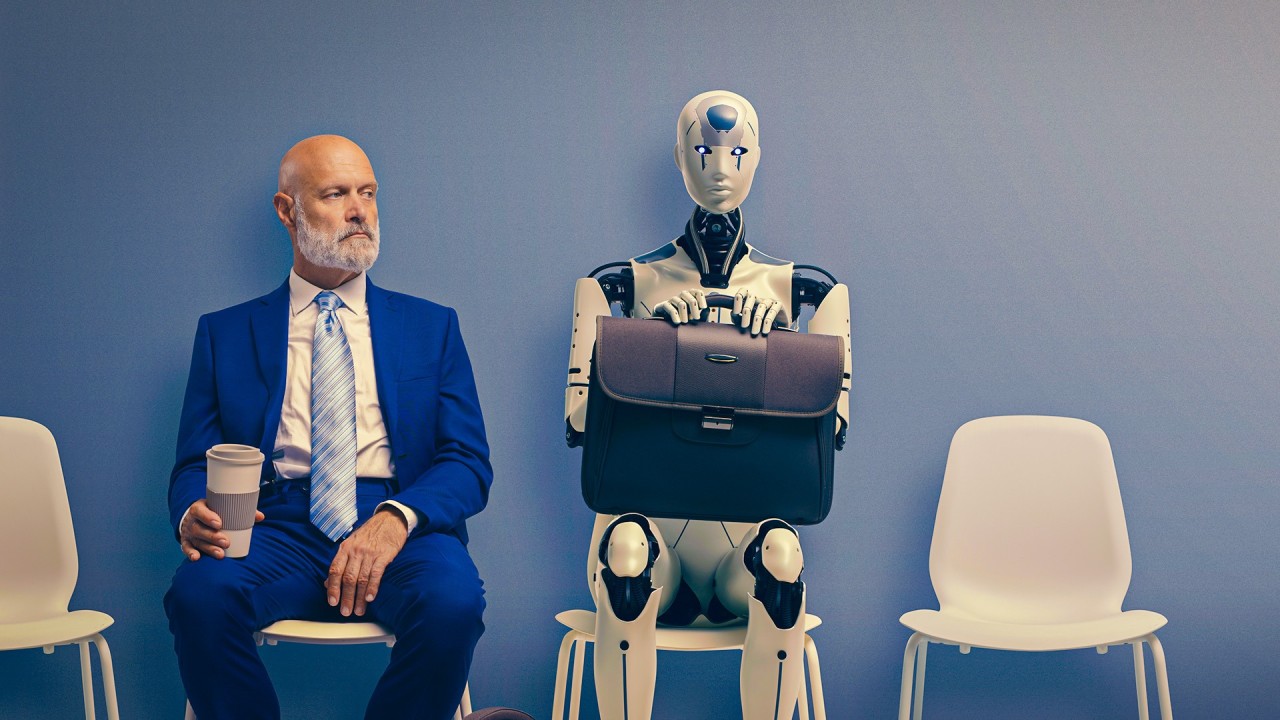
Will AI Replace Human jobs?
Artificial Intelligence (AI) companies are making vast claims about the ability of their tools to replace human labour.
Some jobs will be automated, others will be "augmented". The bosses of the world's biggest companies are diverting vast sums into these tools, partly with the knowledge that they could save money on headcount.
You would have been living under a rock if you did not know how artificial intelligence is set to affect jobs in 2026-2030. AI like ChatGPT seems to be stealing all of the headlines at the moment, Google unveiled new AI software to build presentations, analyze and enter data, and write content, and there are so many more AI tools like Gamma and Numerous AI. Those that are resisting, rather than riding the crest of the wave will not be making hey whilst the sun shines when it comes to landing in-demand jobs in the next 6 years and enjoying job growth. AI will be taking some jobs, but it will be creating new ones! Here are the most likely jobs that artificial intelligence will affect from 2026-2030:
Will AI help the world or hurt it?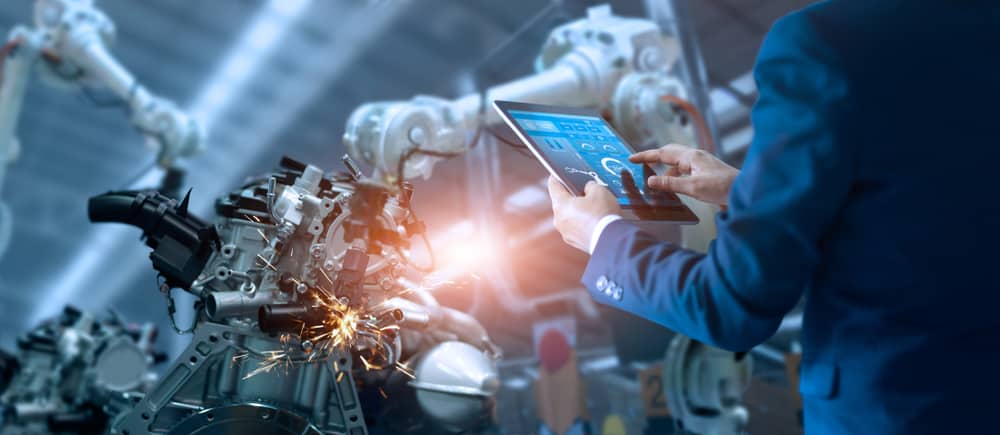
Like any controversial subject, there will always be people who are for it, and those that are against it. Artificial Intelligence is no different. In fact, as new ai tools are introduced, and the news around them grows, so the division between the two camps will grow with it.
Many market research analysts say that AI has the potential to bring about numerous positive changes in society, including enhanced productivity, improved healthcare, and increased access to education. But we need to adapt right now.
Others will say, mostly those working in human work types of jobs that are manually repetitive, that ai and robotics is a disruptive force and when it comes to the future of jobs it merely serves to steal jobs.
But robots and ai technologies can and will create a great many new vocations and help solve complex problems and make our daily lives easier and more convenient.
The jury is not yet out on this, but the leaning is more toward ai being a positive force rather than a negative one.
"Flat is the new up", we are told, in terms of the size of a company's workforce as investors ask whether jobs should be done by new recruits - or, instead, armies of "AI Agents", virtual workers tasked with doing specific roles, some of them relatively skilled.
How will AI affect jobs and the economy?
McKinsey global institute says that at the global average level of adoption and absorption and advances in ai implied by their simulation, AI has the profound impact to deliver additional global economic activity of around $13 trillion in the foreseeable future and by 2030, or about 16% higher cumulative GDP compared with today.
 This amounts to 1.2% additional GDP growth per year. If delivered, this impact would compare well with that of other general-purpose technologies through history. This will mainly come from substitution of labor by automation and increased innovation in products and services.
The same report went on to say that By 2030, the average simulation shows that some 70% of companies will have embraced the ai revolution and adopted at least one type of AI technology but that less than half will have fully absorbed the five categories.
How will artificial intelligence affect society and future?
Forbes says that the future of AI brings endless possibilities and applications that will help simplify our lives to a great extent. It will help shape the future and destiny of humanity positively, whilst Bernard Marr & Co says that the transformative impact of artificial intelligence on our society will have far-reaching economic, legal, political and regulatory implications on all types of jobs and industries that we need to be discussing and preparing for.
Others in the know say that AI has the potential to bring about numerous positive changes in society both now and in the future, including enhanced productivity, improved healthcare, and increased access to education.
AI-powered technologies can also help solve complex problems and make our daily lives easier and more convenient.Forbes say ai has the potential to be among the most disruptive technologies across global economies that we will ever develop.
 How Will AI Affect Jobs - How many jobs will AI replace by 2030
Artificial intelligence (AI) could replace the equivalent of 300 million full-time jobs, a report by investment bank Goldman Sachs says. It could replace a quarter of work tasks in the US and Europe but may also mean new jobs and a productivity boom.
And it could eventually increase the total annual value of goods and services produced globally by 7%. The report also predicts two-thirds of jobs in the U.S. and Europe “are exposed to some degree of AI automation,” and around a quarter of all jobs could be performed by AI entirely.
Researchers from the University of Pennsylvania and OpenAI found some educated white-collar workers earning up to $80,000 a year are the most likely to be affected by workforce automation.
Forbes also says that According to an MIT and Boston University report, AI will replace as many as two million manufacturing workers by 2026.
A study by the McKinsey Global Institute reports that by 2030, at least 14% of employees globally could need to change their careers due to digitization, robotics, and AI advancements
If even half true there will be an impact on us all, across sectors and individual careers, and perhaps it will happen sooner than we think.
Nobel prize-winning economists recently warned the world “must act now” to ensure that AI leads to rising living standards and not large-scale job displacement, and last month London businesses warned they were struggling to find the skills they need as AI disrupts the jobs market.
It is early days yet, but there are already some notable patterns in the data.
This chart is the industry benchmark for how various models can perform the tasks previously done by humans, in this case using and developing computer software.
This measure showed that three years ago, large language models (LLMs) were only able to reliably complete tasks humans took seconds or minutes to do. Now they are increasingly able to complete fairly complex tasks taking an hour or so.
Now, some of the LLMs can find problems in a cryptocurrency contract and even develop and streamline the model itself, which would take a human several hours.
The latest generation of models could start to entirely develop themselves in the next year or so. This is just software coding, but the same type of pattern is being seen, at an earlier stage, with financial analysis, early stage legal work, even some entry level creative industry jobs.
What does that mean for jobs? The most thorough analyses out there come from the United States, using four years of data on employment outcomes by age among a range of occupations most exposed to AI (including software developers and customer contact reps) - and least exposed to AI (health workers, childcare workers, hairdressers).
Stanford University's analysis of wage and jobs data finds a hit to employment for 22 to 25-year-olds of 2.7% since ChatGPT became widespread, rising to 12.8% in the most AI-exposed sectors such as finance, software and creative industries.Not all economists agree, arguing that other factors such as interest rate rises can explain this.Online jobs postings have also been affected since the launch of ChatGPT and other LLMs.

What jobs are most likely to be automated?
1. Customer service representative
Most human customer service interactions are no longer done by phone with human employees manning the lines. Most of the time, the queries and problems of customers are repetitive.
Answering these queries does not require high emotional or social intelligence. Therefore, AI can be used to provide automated responses to frequently asked questions.
2. Receptionists
The majority of companies across the world are now using robots at their reception. Even the calls are being managed by AI now. For example, AimeReception can see, listen, understand, and talk with guests and customers.
3. Accountants/Bookkeepers
Many companies are now using automation and ai for their bookkeeping practices. AI-powered bookkeeping services provide an efficient accounting system and flexibility and security, considering that they are available as cloud-based services.
Using ai algorithms, AI will ensure the data is collected, stored, and analyzed correctly. Using an AI accounting service is significantly less costly than paying an employee’s salary to do the same job.
4. Salespeople
Gone are the days when corporations required salespeople for advertising and retail activities. Advertising has shifted towards web and social media landscapes. The built-in target marketing capabilities in social media allow advertisers to create custom content for different types of audiences.
5. Research and analysis
The fields of data analysis and research are areas that already implement the use of artificial intelligence as a method of streamlining the process and identifying new data without human assistance.
The processing power of modern computers allows for the efficient sorting, extrapolation and analysis of data. As artificial intelligence continues to improve, there may not be a need for humans to play a role in data analysis and research.
6. Warehouse work
Online sales is a steadily growing industry and comes with an increasing need for processes and automated systems that efficiently get orders onto trucks for delivery.One area of focus for streamlining the process has been the use of automation.
Basic automation and artificial implementation in a warehouse allow for easy access to computerized systems to locate packages and direct staff, and future AI may even perform mechanized retrieval and loading to increase shipping capacities.
7. Insurance underwriting
When making assessments on the viability of insurance applicants, the most important work is often in analyzing the data available and applying it within a set of formulas or structures.
Automation can easily complete these tasks and is continually adapting to perform more complicated duties, which may reduce how many underwriters a company requires.
8. Retail
Self-checkout stations at stores are an example of automation in the retail sphere and have gained prominence in grocery stores and big-box outlets. When a company makes use of self-checkout areas, it results from a cost-benefit analysis.
Although allowing customers to scan their own items can increase the instances of theft, the company saves more money by reducing the need for employees working registers.
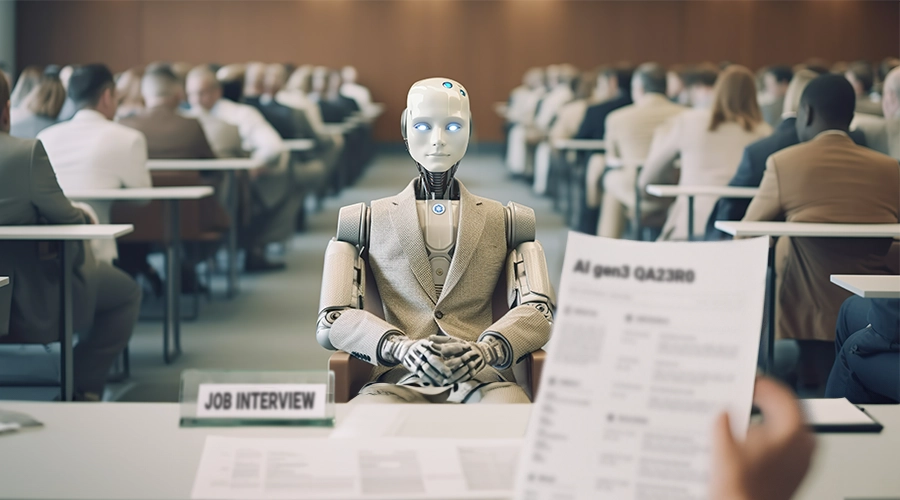
 How to quickly change career
Experts say that ai and machine learning will help workers by creating more occupations than it replaces. That said, in order to ride the wave and build a new career, you have to have procured the skills necessary to get the job done.
If you're exposed to ai and looking to pivot into an AI-focused role, demonstrating your knowledge and experience with AI development can give you an edge.
Why not take a read of our top 10 highest paying AI jobs article here. To acquire the skills to stand out from other would be candidates you should: ramp up your technical skills, complete online courses, understand the industry, gain work experience, and develop your soft skills.
AI will require extensive research and collaboration as it is still an emerging area. Soft skills will help set you apart from other developers who only have technical skills.There are many other factors here, from interest rates to taxes, however there is something of note in the OECD's recent analysis of the difference in jobs posting between its slightly different measure of highly exposed sectors (eg telemarketing and legal services) and less exposed sectors (construction, cleaning and food prep).The UK was hit quite notably on this measure at a time when rates were stable or being cut. It also predates last year's National Insurance rise. On most international measures, the UK's service sector concentration leaves it exposed to potential AI jobs losses.
AI usage is measured in "tokens", which are small chunks of text that AI systems use to understand, analyse and generate language. On average, one token is roughly equivalent to three-quarters of an English word.
There have been astonishing increases in AI use in 2026, and the increase in token use has vastly outweighed the declining “per token cost”.
The world's top companies that are using AI had deployed "token leaderboards" to try to get their employees to create as much gain in productivity as possible from the most advanced models.
Trillions, and sometimes thousands of trillions of tokens (quadrillions) have been used over the past few months primarily for “agentic use”, which is for agents that can perform tasks automatically. The problem here is that incredible bills were racked up, so much so that many of those companies have now begun to ration the use of these models.
This is important. It might show that there are limits to how much work could be automated. The virtual workers might be more expensive than the human ones. It depends on the task.
One factor to watch out for however, is that many companies, including Western ones, are diverting to much cheaper forms of AI, derived from Chinese models that are provided freely on to the market.
So there is much uncertainty here, but some clear trends emerging.
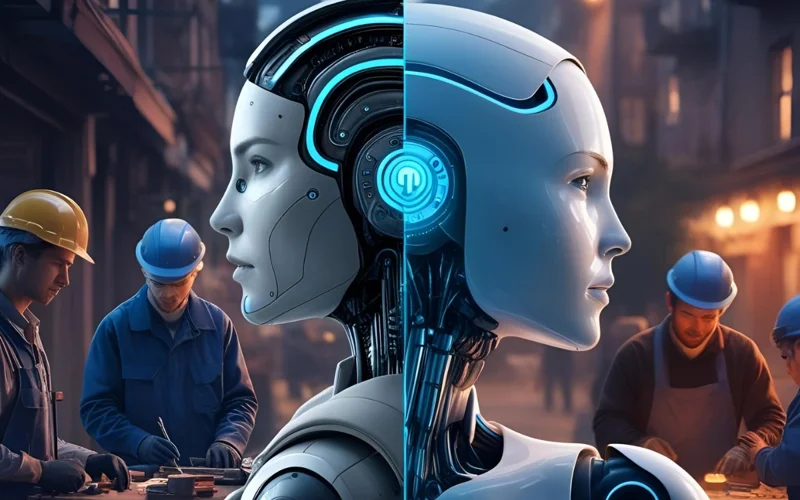
Which jobs will not be replaced by ai?
It is widely touted that ai will create more jobs than it replaces. Further to that, many in certain industries will breath a sigh of relief that ai will not threaten their vocation and livelihood.
These are some of the jobs that will not involve repetitive tasks and be prone to disruption. This means that ai will not replace those that perform them in the open labor USA market.
1. Teachers
Teachers often represent a reference point for many of us. Often, our academic decisions are partly based on how inspiring a USA particular teacher has been with us in the years prior. For all these reasons, it is almost impossible that we will have a fully digital teaching experience in the Future.
2. Lawyers and judges
These positions have a strong component of negotiation, strategy and case analysis. A lot is based on the personal experience and knowledge of each specialist.
It requires a certain set of skills to be able to navigate complex legal systems and argue in defense of a client in court. There is a human factor involved when it comes down to consider all the various aspects of a trial and take a final decision that could turn into years in prison, in the case of a Judge.
3. Directors, Managers and CEOs
Managing teams inside an organization is a matter of Leadership and this is not a stack of behaviors that can be written down in a code and processed in a linear way.
A CEO is also the person responsible for sharing the company’s mission and value down to the team. It is very unlikely that investors will ever feel comfortable investing in a company managed by robots or algorithms.
4. HR Managers
Although ai does assist in the hiring process to make sifting through CVs so much easier and quicker, Human Resource Managers still cover a variety of very important tasks inside an organization.
Hiring new professionals is just part of their prerogatives. They also are a key position inside the organization for maintaining the staff motivated, detecting early-on signs of discontent, and manage them if possible.
5. Psychologists and Psychiatrists
Although a lot of face recognition technology is currently being used to develop initial AI counseling care and support, given the growing demand, mental health is a very delicate topic. Human touch is essential when it comes down to supporting people to succeed in their lives in all of the aspects that it can entail.
6. Surgeons
For sure, technology has seriously increased the accuracy with whom we are today able to diagnose and detect diseases in any medical report. Micro robotics also enhance the precision of the surgeons when it comes down to operation, enabling less invasive procedures.
But being a surgeon requires the ability to connect with the patient on so many other different levels while taking a vast number of the factor under consideration at the same time. Experience, knowledge, and skills acquired throughout the years are all factors that need to be condensed in a matter of minutes during an operation.
7. Computer System Analysts
No matter how automated we become, there will always be the need of a human presence that can run maintenance work, update, improve, correct, and set-up complex software and hardware systems that often require coordination among more than one specialist in order to properly work.
Reviewing the system capabilities, controlling the workflow and schedule improvements and increase automation is only part of a Computer System Analyst, a profession that is a great demand in the last years.
8. Artists and writers
Writing especially is such an imaginative fine art, and being able to place a specific selection of words in the right order is definitely a challenging endeavor.
So even if AI technically would have the capacity of absorbing the content of most books in the world, in probably any language and come up with a somewhat personal style of communication, the magic and thrill of creating art with words is something that is pretty much going to rest in our domain of competition in the years to come.
Posted on 2026/11/18 09:09 AM