
Native American Heritage month
National American Indian Heritage Month is observed every November in the United States to honor the history, cultures, traditions, and contributions of Native American and Alaska Native communities.
Key Facts
- Official Designation: President George H.W. Bush signed a joint congressional resolution in 1990 making November the first National American Indian Heritage Month.
- Tribal Nations: It recognizes more than 575 federally recognized tribes USA across the country.
- Heritage Day: The Friday immediately following Thanksgiving is officially recognized as Native American Heritage Day.

- Why November: The month historically aligns with the conclusion of the harvest season, a traditional time for Indigenous communities to gather, give thanks, and share resources.
- Early Advocates: Pioneers like Dr. Arthur C. Parker (Cattaraugus Seneca) and Rev. Red Fox James (Blackfoot) advocated for decades to establish official recognition for Indigenous peoples.
November is Native American Heritage Month, which was established in 1990 to recognize and honor the people who are indigenous to this land. Many educators use this as an opportunity to teach about Native American history, art, identity, culture, and contemporary issues. But while it’s important that Alaska Native and American Indian heritage is represented in our classrooms, it is far more essential that these lessons accurately reflect the breadth and depth of Native American experience.
Unfortunately, much of the available information has been written by non-Natives. These outsider narratives often rely on dehumanizing stereotypes and depict Native Americans as a single, homogenous entity. Whether conscious or not, centering these stories reinforces misinformation that has been used to justify land theft and genocide against Native people for generations.
In reality, an enormous diversity of tribal nations call this land home. While more than 570 tribal nations are recognized by the U.S. government, many more exist beyond the scope of federal recognition. We see this diversity in the region we serve.
For example, more than 200 Alaska Native tribes speak at least 20 distinct languages, including Inupiaq, Tlingit, and Dena’ina. Communities like the Lummi, Quinault, Makah, Clatsop, Siletz, Cow Creek, and Coquille have lived and survived along the Pacific Coast for thousands of years. Farther east, the Columbia Plateau, Great Basin, Northern Rockies, and Great Plains regions are home to descendants of the Yakama, Nez Perce, Shoshone, Bannock, Northern Paiute, Bitterroot Salish, Blackfeet, Assiniboine, Crow, Northern Cheyenne, and numerous other tribes and bands. Each community carries unique traditions, histories, and culture that continue to shape their lived experience today. Across the United States, strong Native communities continue to thrive on reservations, across rural regions, and in urban centers. These distinct geographic contexts add another layer of complexity to Indigenous people’s experiences and identities.
We as educators and education leaders have the responsibility to teach authentic, varied stories of Indigenous experiences and to recognize the individuality of the Native students and communities we serve. How can we make sure that we not only honor the histories of Indigenous peoples but also respect them as diverse, thriving communities?
One starting point is to learn the history of the land where you live. This website helps identify specific tribes from your region that you can research. Many tribal governments’ websites offer educational resources and first-person narratives to support your learning. Additionally, the Reclaiming Native Truth project offers resources to support allies in dispelling false narratives.
You can also choose to center Native perspectives in your classrooms. Curriculum focused on authentic Indigenous experiences in your state and community will help you teach the full story. One example is Education Northwest’s collaborative project with the Oregon Department of Education< to create a statewide curriculum recognizing the history and contributions of American Indian and Alaska Native people. This project was similar to the Indian Education for All initiative carried out by the Montana Office of Public Instruction, which provides educators with a wealth of knowledge, skills, and resources. Books like An Indigenous Peoples’ History of the United States for Young People also present alternate narratives that can engage your students in learning about the history of distinct tribes.
It’s also important to understand the current reality of education for Indigenous students firsthand. Without taking time to hear their perspectives, we risk building our perceptions on stereotypes. The recently published Indigenous Children’s Survivance in Public Schools highlights the experiences of Indigenous teachers, students, and families to help educators learn how to better support them. We must also understand the distinct stories and cultures of specific students we serve to make classrooms relevant and responsive.
This month, Education Northwest will highlight stories of schools and educators in our region who are uplifting Native culture and community. These efforts serve as examples of how changes to our practice can better support the diversity of Native students’ lives and experiences and can challenge dominant narratives about Native communities. In the meantime, you can explore more resources we’ve shared on Native education.
For educators and districts, honoring Native American Heritage Month should not mean a one-month add-on to existing curriculum. To honestly respect our Native communities and colleagues, we must look critically at the stories we teach, and the stories we tell ourselves, all year long.
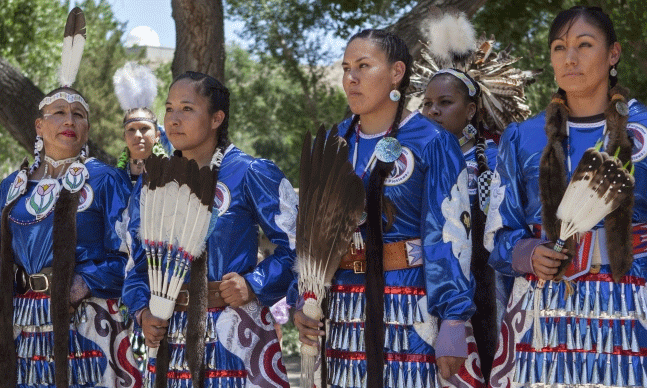
At the 2025 Smithsonian Folklife Festival, the Native Language Reclamation in the U.S. program featured four groups representing different languages, regions, and ways of life and learning, including Hālau I Ka Leo Ola O Nā Mamo (pictured) from Hawai‘i. Each group offered engaging activities—games, crafts, cooking, dance—that connect them to their cultures and motivate them to learn their languages.
This online research guide developed by the digital subgroup of the Native American Collections Working Group links to resources at the Library of Congress that relate to Native communities in the continental United States, Alaska, Hawaii, Canada, Mexico, South America, and the Caribbean.
American Indians have eagerly served a government which did not always keep its word to their ancestors. They have volunteered to serve in conflicts from World War II to Iraq. Few encountered any overt prejudice while in uniform, but for all American Indian veterans, the honor of defending their country overrode all other considerations.

Native American Heritage Month is a federal observance held each November to honor American Indians and Alaska Natives. Congress first recognized the designation in 1990, and presidents issued proclamations celebrating the event until 2025.
Origins of Native American Heritage Month
Efforts to formally recognize Native Americans began in the early 20th century. Arthur Caswell Parker, a Cattaraugus Seneca historian, laid the groundwork for later federal observances when he helped launch the Society of American Indians in 1911; he also convinced the Boy Scouts to recognize a "First Americans Day” from 1912 to 1915.
In 1914, the Reverend Red Fox James of the Blackfeet tribe rode approximately 4,000 miles to petition President Woodrow Wilson to establish a national "Indian Day." Wilson made no known proclamation then—or the following year, when James returned to Washington, D.C. and delivered endorsements from 24 governors.
Several states, however, began setting their own observances around this time. In 1916, New York became one of the first states to mark “American Indian Day” after advocacy by Parker and the Congress of the American Indian Association, according to the Bureau of Indian Affairs.
More progress was made in 1924 when Congress passed the Indian Citizenship Act, granting U.S. citizenship to all Native Americans born in the United States. (Voting rights, however, weren't nationally protected until the 1965 Voting Rights Act.)
Advertisement
California followed suit in 1939 with an “Indian Day,” and, in 1968, Governor Ronald Reagan created a “California Indian Day.” National steps followed, including a 1976 proclamation by President Gerald Ford designating a “Native American Awareness Week.”
Reagan, as president, established an “American Indian Day” in 1983 and Congress created the first “American Indian Week” in 1986. Reagan’s Proclamation 5577 supporting that effort stated that Native Americans were the country’s first settlers and explorers.
“Indians make contributions in every area of endeavor and American life, and our literature and all our arts draw upon Indian themes and wisdom,” the proclamation reads. “Countless American Indians have served in our Armed Forces and have fought valiantly for our country.”
According to the Library of Congress, a second “American Indian Week” followed in November 1987. In 1988, it was renamed “National American Indian Heritage Week" and moved to September to coincide with the harvest season. In 1989, President George H.W. Bush proclaimed December 3-9 “National American Indian Heritage Week.”
Federal Recognition of Native American Heritage Month
Congress passed a joint resolution in 1990 to dedicate a full month of recognition to Native Americans. Bush, in turn, issued a proclamation designating November 1990 as “National American Indian Heritage Month.” Similar presidential proclamations continued through 2024.
“Today we reaffirm our support for increased Indian control over tribal government affairs and we look forward to still greater economic independence and self-sufficiency for Native Americans,” Bush’s 1990 proclamation stated.
The resolution noted the timing of the recognition coincided with the upcoming 500th anniversary of Christopher Columbus’ arrival in the Western Hemisphere in 1492.

Additionally, Congress created Native American Heritage Day on the Friday after Thanksgiving in 2009 under the Native American Heritage Day Act. This established the observance, but did not make it an official federal holiday. In 2025, President Donald Trump, as part of his rollback of diversity-related policies, broke with White House tradition and issued a brief message rather than a formal presidential proclamation.
The goals of Native American Heritage Month include educating the public about Indigenous histories and cultures, recognizing tribal sovereignty, preserving cultural traditions and languages and honoring contributions in areas such as military service, arts, science, sports and governance.
According to the U.S. Census Bureau, as of 2023, there were 574 federally recognized tribes in the United States and about 9.7 million people with American Indian and Alaska Natives ancestry, making up 2.8 percent of the U.S. population.
Throughout November, communities, schools and institutions host a variety of events, including exhibits showcasing Indigenous art and history and educational programs and curriculum in schools. Other events include public readings, storytelling events, film screenings, festivals and community gatherings.
“This month is a time to honor the legacy of our ancestors, but every day we should stop to think about our country’s beginning, and that the U.S. would not exist if not for a great deal of sacrifice, blood and tears by Indian Tribes across the country,” former New Mexico Congresswoman Deb Haaland of the Pueblo of Laguna, told The New York Times in 2018.
Former Secretary of the Interior Haaland—the first Native American to serve as a cabinet-level official—added that Native Americans have much to celebrate. As she told the Times, “The songs, dances, culture and traditions surrounding planting and harvests, the prayers that are sent upward for healing and peace, and the welcoming of children into our families, are all reasons for us to keep moving forward with optimism.”
National Native American Heritage Month is observed each November and honors the rich histories, diverse cultures, and contributions of more than 574 federally recognized tribes in the United States. For those asking when National Native American Heritage Month is, it takes place throughout November, with the Friday following Thanksgiving designated as Native American Heritage Day.
 This observance is not only about recognizing the past. It celebrates a living and evolving cultural landscape, often described as a “beautiful mosaic” of traditions, languages, and identities that remain deeply connected to the land. It is also a time to look toward the future, supporting Native youth, uplifting tribal communities, and encouraging meaningful allyship rooted in respect, cultural preservation, and the protection of Native lands and lifeways.
- When: Observed throughout the entire month of November each year.
- Heritage Day: The Friday following Thanksgiving is officially recognized as Native American Heritage Day.
- Who it honors: More than 574 federally recognized tribes across the United States.
- Who signed it into law: President George H.W. Bush signed the joint resolution in 1990, establishing November as the first National American Indian Heritage Month.
- Why November: Historically aligned with the end of the harvest season, a traditional time for tribal communities to gather, give thanks, and share resources.
- Early advocate: Reverend Red Fox James (Blackfoot) traveled over 4,000 miles on horseback in 1914–1915 to petition for a national day of recognition.
History and Origins: Why November?
Understanding the National Native American Heritage Month history helps show how this observance came to be and why it continues to hold meaning today. The recognition of Native cultures and contributions did not happen overnight. It was the result of decades of advocacy led by Native leaders and allies who pushed for national acknowledgment.
Early Advocacy
The movement began in the early 20th century with individuals committed to raising awareness and recognition.
-
In 1914–1915, Reverend Red Fox James traveled more than 4,000 miles on horseback across the United States. He gathered support from state governments to establish a national “Indian Day”, laying important groundwork for future recognition.
-
In 1916, Dr. Arthur C. Parker (Seneca) worked to elevate awareness of Native history and culture. He persuaded the Boy Scouts of America to dedicate a day to the “First Americans” and helped New York become the first state to officially recognize an American Indian Day.
The Legislative Timeline
Over time, these early efforts led to national recognition through federal action.
-
In 1976, Gerald Ford authorized Native American Awareness Week, marking a significant step toward broader national recognition.
-
In 1990, President George H.W. Bush signed a joint resolution officially designating November as National American Indian Heritage Month, establishing the nationwide observance recognized today.
Why November?
November was chosen in part because it aligns with the conclusion of the harvest season, a time that has long held cultural importance for many Native communities. Traditionally, this period is associated with gathering, sharing food, giving thanks, and strengthening community bonds.
This seasonal connection reinforces that National Native American Heritage Month is not only about recognition, but also about honoring traditions that continue to shape Native life today.
The Purpose and Importance of the Month
National Native American Heritage Month is more than a recognition of history. It’s a time to reflect on the present, uplift Native voices, and support the future of Native communities. The observance creates space for both education and action, connecting cultural understanding with real-world impact.
For Communities

 For many Native communities, National Native American Heritage Month serves as a meaningful opportunity to reclaim narratives that have long been overlooked or misrepresented. It creates space to center Native voices, honor lived experiences, and share stories that reflect both history and present-day realities.
This includes raising awareness around ongoing challenges such as poverty, land rights, and Missing and Murdered Indigenous People (MMIP). These issues are not separate from cultural identity; they are deeply connected to the well-being of communities and the protection of Native life.
As Faith Spotted Eagle has shared, this work is about “bringing back our people from emotional death.” Cultural preservation, language revitalization, and community-led initiatives are not simply traditions to maintain. They are part of a broader process of healing, resilience, and restoration.
For the Public
For the broader public, National Native American Heritage Month is an opportunity to deepen understanding and move beyond simplified or outdated views of Native communities. It encourages learning about Tribal Sovereignty, the inherent right of Native nations to govern themselves, make decisions for their people, and maintain their cultural and political systems.
It is also a time to recognize that Native communities are not a single, uniform group. Each nation has its own history, language, and identity. Moving beyond homogeneous stereotypes allows for a more accurate and respectful understanding of Native life today.
By engaging with this month thoughtfully, individuals can become better allies, supporting Native communities through awareness, respect, and informed action.
Indigenous Peoples' Day vs. Native American Heritage Month
While both observances center around Native communities, they serve different purposes and take place at different times of the year.
-
-
Observed in October, often as a counter-celebration to Columbus Day
-
Focuses on recognizing the resilience of Native communities
-
Acknowledges the impacts of colonization and historical injustice
-
Emphasizes Tribal sovereignty and the continued presence of Native nations
-
-
National Native American Heritage Month:
-
Observed throughout November as a month-long recognition
-
Focuses on education, cultural awareness, and celebration
-
Highlights a “living library” of Native traditions, including languages, stories, and art
-
Encourages deeper engagement with Native communities and support for cultural preservation
-
Together, these observances provide meaningful opportunities to learn, reflect, and better understand Native communities today.
Lakota Traditions Spotlight: A Living Heritage
When people search for National Native American Heritage Month activities, it’s important to understand that these are not simply events or performances. They are part of a living system of knowledge, passed from elders to youth through generations. Native American heritage is preserved through oral tradition, where teachings are shared carefully, respectfully, and in context.
As shared by Loretta Afraid of Bear Cook, these traditions are not separate from daily life. They are how identity, responsibility, and community values are carried forward. This is what makes Native heritage a “living library,” one that continues to grow through each new generation.
The Seven Sacred Ceremonies
Within Lakota communities, the Seven Sacred Ceremonies form a foundation of spiritual life and community resilience. While not all ceremonies are widely shared outside the community out of respect for their sacred nature, some teachings are publicly known and help illustrate their role in guiding individuals through life.
-
Inipi (Sweat Lodge): A ceremony focused on spiritual and physical purification, bringing individuals together for reflection, prayer, and renewal.
-
Isnati (Coming of Age): A ceremony for young women that marks their transition into adulthood and introduces new responsibilities within the community.
-
Ho Wakan (Sacred Voice): A rite of passage for boys, often beginning around age 12, where they receive sacred items such as an eagle bone whistle and begin learning their role in service to the USA community.
These ceremonies are not isolated traditions. They are part of a broader system of teachings that reinforce balance, responsibility, and connection to both community and the natural world.
Spotlight: Tapa Wakal Eyayapi (Toss the Ball)
One example of how cultural practices build future leaders is Tapa Wakal Eyayapi, often referred to as “Toss the Ball”.
-
The Ritual: A young girl, typically between the ages of 5 and 10, tosses a sacred ball in the four directions, upward to the cosmos, and downward to Earth Mother.
-
The Physical Detail: The ball is carefully handcrafted from buffalo or deer skin, filled with buffalo hair, and decorated with porcupine quills.
-
The Lesson: This is more than a game. It teaches responsibility to the land, awareness of one’s place in the world, and the social skill of learning how to live and work with others in the community.
Through ceremonies like this, National Native American Heritage Month activities become opportunities to understand how culture is actively taught, not just remembered.
The Symbolism of "Materials from the Land"
In many Native traditions, materials from the land are not just resources. They are part of identity, knowledge, and responsibility.
-
Porcupine Quills: These are dyed and woven into detailed patterns on regalia and moccasins, reflecting both artistic expression and a connection to the natural world and ancestral knowledge.
-
Eagle Feathers: Symbols of strength and honor, used in ceremony to recognize achievements and maintain a connection to the “winged creatures”.
-
The Oglala Knife: A teaching often shared is that a well-prepared Oglala woman carries her knife, symbolizing her role and authority in preparing food and supporting the community during gatherings and ceremonies.
Together, these elements show that Native American heritage is not separate from the land. It is shaped by it, sustained by it, and carried forward through each generation.
How to Celebrate National Native American Heritage Month?
National Native American Heritage Month offers meaningful ways to learn, reflect, and take action. Whether through education, community participation, or everyday choices, there are many ways to engage respectfully and support Native communities.
Posted on 2026/11/02 09:00 AM