

Lindsay Clancy Verdict
Investigative Reporter Anne Emerson is back from vacation and speaks with Family and Criminal Defense Attorney Ally Crouthamel about what is happening behind the scenes as the jury weighs the extensive record, works through notes and testimony, and asks to re-examine physical evidence from that night. Ally breaks down the five verdicts jurors are weighing for each count — first-degree murder, second-degree murder, manslaughter, not guilty, and not guilty by reason of insanity or lack of criminal responsibility under Massachusetts law — explains why the jury could theoretically reach different verdicts for each child but why she believe s that would be unlikely, why conflicting mental health testimony could be decisive for reasonable doubt, and what a deadlocked jury could mean, including the prospect of a retrial.
The fate of US mother Lindsay Clancy is now in the hands of a Massachusetts jury, who must decide if she is guilty of first-degree murder - the intentional and premeditated killing of another person - in the deaths of her three children.
For five weeks, the trial has gripped the country as Clancy's lawyers have argued that she was suffering from postpartum psychosis when she killed her children, who ranged in age from eight months to five years. Clancy does not deny killing her two sons and daughter.
The prosecution argued she made a calculated decision to intentionally murder them.
The jury could find Clancy guilty of first-degree murder, guilty of lesser charges, or not guilty.
The jury of nine women and three men completed their first day of deliberations on Thursday. They will return on Friday.
In the state of Massachusetts, a first-degree murder conviction carries a mandatory life in prison sentence without the possibility of parole.
The jury could instead find Clancy guilty of second-degree murder - committed with malice or extreme recklessness, but without prior planning - or involuntary manslaughter - causing death because of extreme carelessness. Those convictions, too, would lead to some prison time.
Attorneys for both sides made closing arguments on Thursday before the jury began deliberating.
Kevin Reddington, Clancy's lawyer, repeated the defence's argument that she was experiencing postpartum psychosis when she killed the children with exercise bands at their home and then attempted to end her own life by jumping out of a window. Clancy was paralysed by the attempt and has attended the trial in a wheelchair.
"This young lady is not guilty of the killing of her children because she was suffering from a disease and defect," Reddington said, adding that he believed prosecutors were "not going to be able to prove otherwise".
The UK's National Health Service (NHS) defines postpartum psychosis as a rare and serious mental health illness that can affect someone soon after having a baby, and which should be treated as a medical emergency.
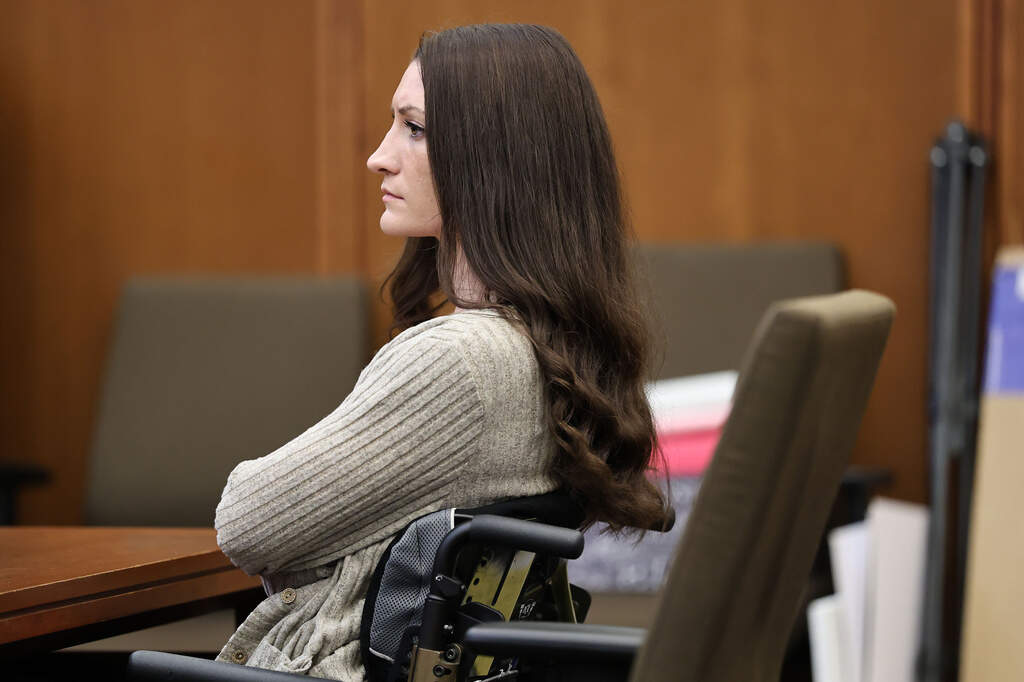
 One of the more tense moments of the closing arguments came when Reddington directly addressed the prosecutors and asked them to explain why they tried to prove Clancy's suicide attempt was not serious. The judge interrupted and ordered him to address only the jury.
Prosecutor Jennifer Sprague did not dispute that Clancy was mentally ill, but told the jury that the defendant could tell the difference between right and wrong at the time of the killings.
"It's not the system or the DSM that caused her to strangle her kids," Sprague told the jury, referencing the US encyclopaedia of mental heath diagnoses, which does not give postpartum psychosis its own classification.
Sprague also said Clancy had an "abundance of care", but had hidden thoughts from doctors about harming her kids.
Attorneys for both sides made closing arguments on Thursday before the jury began deliberating.
Kevin Reddington, Clancy's lawyer, repeated the defence's argument that she was experiencing postpartum psychosis when she killed the children with exercise bands at their home and then attempted to end her own life by jumping out of a window. Clancy was paralysed by the attempt and has attended the trial in a wheelchair.
"This young lady is not guilty of the killing of her children because she was suffering from a disease and defect," Reddington said, adding that he believed prosecutors were "not going to be able to prove otherwise".
The UK's National Health Service (NHS) defines postpartum psychosis as a rare and serious mental health illness that can affect someone soon after having a baby, and which should be treated as a medical emergency.
One of the more tense moments of the closing arguments came when Reddington directly addressed the prosecutors and asked them to explain why they tried to prove Clancy's suicide attempt was not serious. The judge interrupted and ordered him to address only the jury.
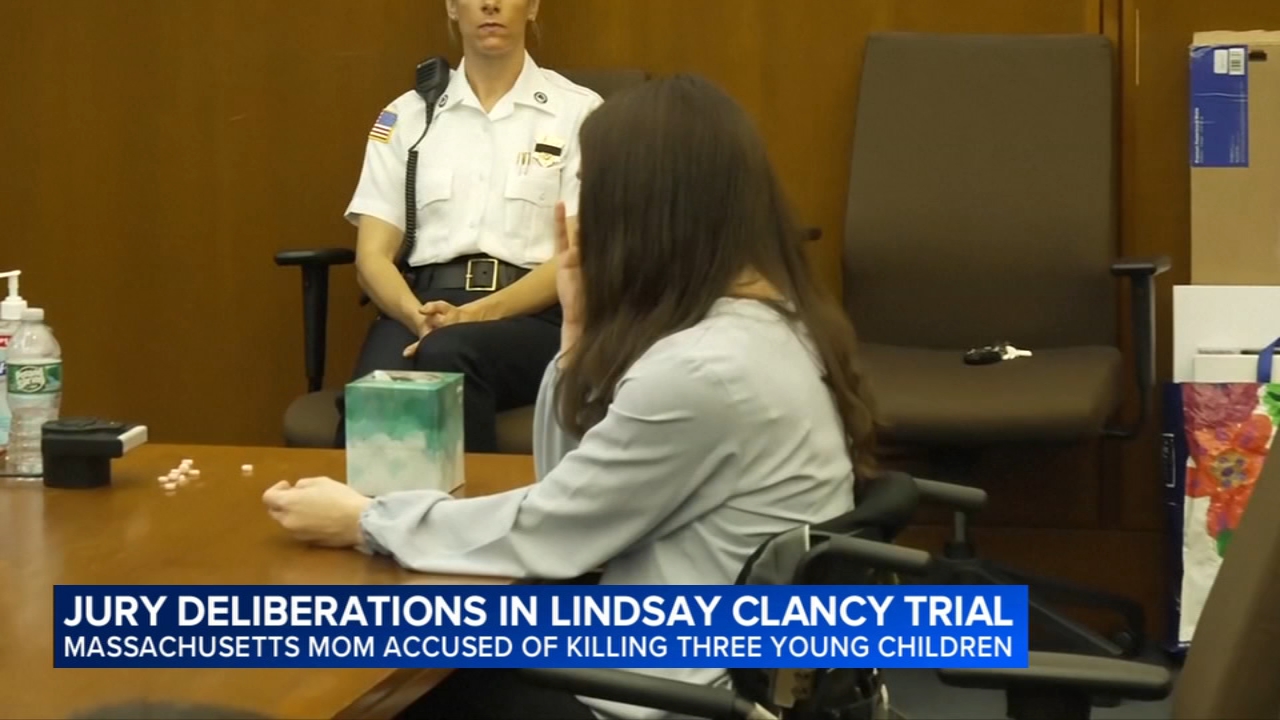
 After jury deliberations in Lindsay Clancy’s murder trial ended Monday, her attorney said his client was nervous but buoyed by the support the high-profile proceedings have generated.
That support, Kevin Reddington told reporters, had arrived in the form of enough letters to fill three banker’s boxes.
Reddington said he believed the case — which has highlighted a severe but rare mental illness for new mothers, postpartum psychosis — had struck a chord with so many women because of the “atrocious” medical and psychiatric care the trial has exposed.
“She knows that there are people out there that have not judged her and know that she is a wonderful, wonderful person,” he said.
Monday marked the third day of deliberations for the jury, which must determine whether Clancy is criminally responsible for killing her three children on Jan. 24, 2023. The panel finished deliberating shortly before 4 p.m. without reaching a verdict.
Reddington and prosecutors representing the commonwealth of Massachusetts offered their closing arguments Thursday morning, paving the way for the start of deliberations that afternoon.
Friday brought a full day of deliberations that yielded no verdict but did bring one question. Jurors asked the judge to review pill bottles and a knife that were entered into evidence, Reddington said last week.
Earlier Monday, Reddington told reporters that the jury never got to see those pieces of evidence, so he didn’t read much into its request to view it, and he called the jury “very thorough.”
Clancy, 36, is accused of strangling her three young children — Cora, 5, Dawson, 3, and Callan, 8 months — more than three years ago in the basement of her Duxbury, Massachusetts, home while her then-husband was out running errands.
When he returned, he found Clancy on the frozen ground outside their home underneath a second-story window after a suicide attempt that left her paralyzed from the waist down.
Her attorneys have argued she was in a state of psychosis and was compelled to act on auditory hallucinations at the time of the killings. The hallucinations, they have said, were a symptom of postpartum psychosis.
But the prosecution has said that Clancy was not in psychosis, and that she was aware of her actions at the time of the killings. They have argued that she planned the murders ahead of time and acted with intention, which indicates she was not psychotic at the time.
The prosecution has pushed for a first-degree murder conviction. If she is convicted of first-degree murder, she faces life in prison.

The jury — nine women and three men — also has the option to convict Clancy of lesser charges, including second-degree murder and manslaughter.The jurors can also absolve Clancy of the crime or deem her not guilty by lack of criminal responsibility — meaning they believe she did kill the children but couldn’t control her actions because she was in psychosis.Judge William Sullivan has said that if Clancy is found not guilty by reason of lack of criminal responsibility, the district attorney or another authority will likely petition the court to commit her to a mental health facility. It is unclear what her sentencing will look like if she is convicted of a lesser charge.Asked Monday what he thinks a just verdict is for his client, he told reporters, “Well, put it this way: If I was representing you, I don’t think I’d be real happy if the jury said you were guilty, right?”The weekslong murder trial is now in its final stages, after jurors and onlookers heard from more than 80 witnesses.After court Monday, Reddington commended the jury, saying the panel appeared attentive during testimony and was most likely “going through everything” in deliberations.
“Nobody’s called in sick,” he said. “Nobody’s bailed out. I mean, they’re really focused people, and they’re doing their due diligence.”
Lindsay Clancy's murder trial has gripped the American public for the last five weeks.
The 36-year-old former nurse killed her three small children in the basement of their family home in Massachusetts.
Charged with three counts of first-degree murder, she does not dispute killing her two sons and daughter in 2023.
But her lawyer argues she was suffering from postpartum psychosis at the time, and therefore could not distinguish right from wrong.
The prosecution, on the other hand, argues Clancy made a calculated, intentional decision to kill them and knew right from wrong in that moment.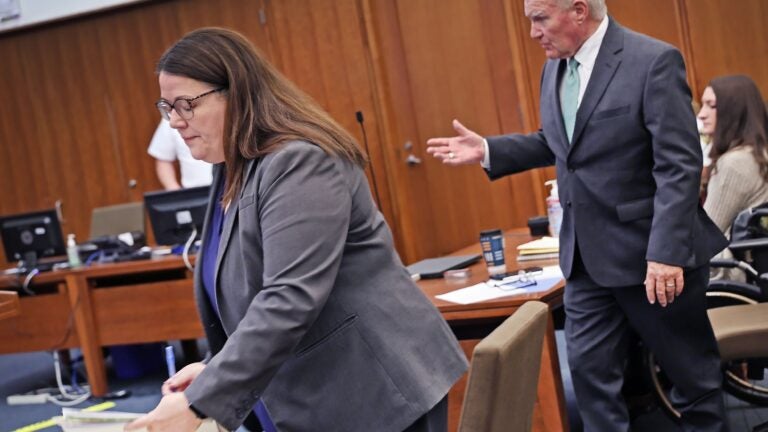
On Monday morning, a jury of nine women and three men will continue to deliberate, with several options before them:
- not guilty
- not guilty by reason of insanity
- first-degree murder
- second-degree murder
- manslaughter
Expert witnesses told the court how severe this illness can be, and family members testified about Clancy's state of mind.Under Massachusetts law, there is no burden on Clancy to prove her mental illness and that she lacked criminal responsibility.Rather, it is on the prosecution to prove beyond reasonable doubt that she was criminally responsible when she killed her children, criminal defence lawyer Elyse Hershon told the BBC.They can do this by either proving beyond reasonable doubt that she didn't suffer from a mental illness at the time or that, while she had a mental illness, she still controlled her actions and knew they were wrong.A not guilty verdict would mean Clancy went free but that is considered highly unlikely. Much more likely is a not guilty by reason of insanity, which would result in Clancy being detained at a hospital."The case really comes down to where she is going to serve the rest of her life; the defence thinks it should be a psychiatric facility, the prosecution thinks it should be in a state prison," Hershon said.In the state of Massachusetts, this conviction carries a mandatory sentence of life in prison without the possibility of parole.
As Heather Cucolo, a New York Law School professor and expert in mental health law, put it to the BBC, Clancy would effectively need to be seen as "a monster in the jury's eyes" if they pick this outcome.
Jurors would have to find there was extreme atrocity or cruelty or premeditation or both to convict Clancy of this, and it would mean the prosecution had proven there were no mitigating factors.In this case, mental disease or defect - as the law describes it - could be a mitigating factor.Prosecutor Jennifer Sprague said during closing arguments there was no dispute Clancy was suffering from mental illness but it was not so severe that she didn't know right from wrong.Expert witnesses for the prosecution cast doubt on whether Clancy actually heard the voice that she said ordered her to kill her children.It applies to unlawful killings committed with malice or extreme recklessness, but without prior planning.
"For this verdict, the jurors may not be convinced that the actions leading up to the murder rose to the level of pre-planned [or] premeditated but that instead, Clancy consciously saw an opportunity to commit the killings at the specified time," Cucolo said.
In the case of second-degree murder, Clancy would also face a life sentence - but with the possibility of parole.
Posted on 2026/09/01 09:08 AM