
Memorial day 2026
- National Moment of Remembrance: Americans paused at 3:00 p.m. local time to observe a minute of silence honoring the fallen.
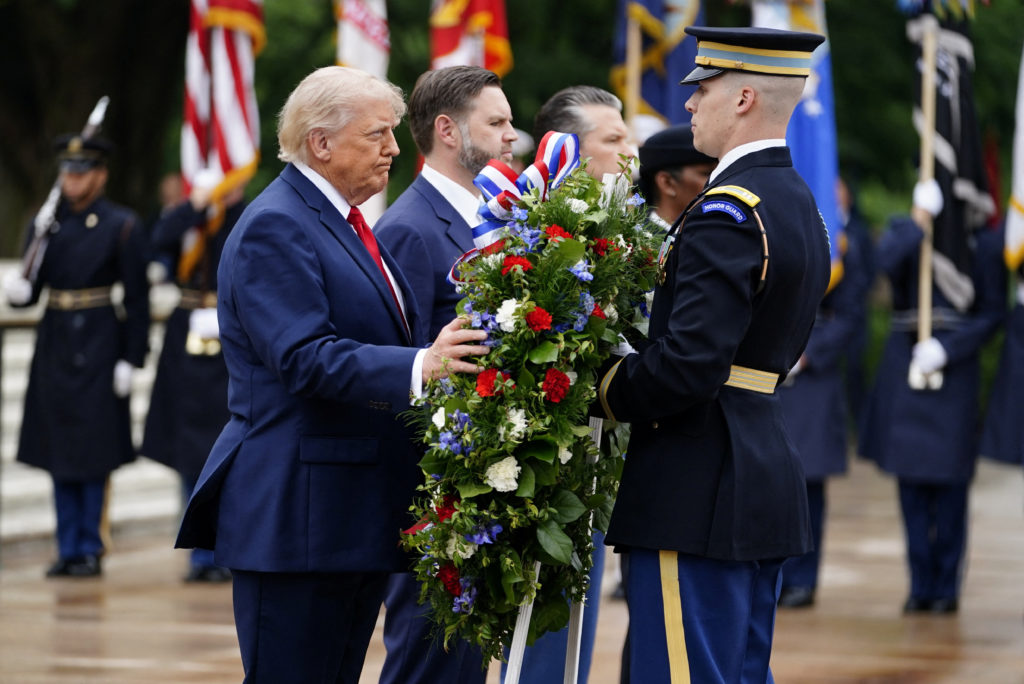
- Official Ceremonies: Notable observances took place nationwide, including wreath-laying ceremonies at the Arlington National Cemetery and local tributes across the country.
- The National Memorial Day Parade: Washington, D.C. hosted the annual event honoring service members from the American Revolution to the present day.
Community Initiatives
Several organizations hosted large-scale, nationwide tributes in 2026:
- Travis Manion Foundation: Volunteers placed hand-crafted tokens at the resting places of fallen heroes across National Cemetery locations.

- Team RWB: A "Memorial Minutes" national challenge was held to honor the 1.3 million Americans who have given their lives in service.
The greatest fighting force the world has ever known is built upon the extraordinary service of selfless men and women who safeguard our liberty and preserve our way of life. Since the birth of our Nation nearly 250 years ago, countless souls have lost their lives in this noble and righteous pursuit. On Memorial Day, we honor these American heroes.
America endures in strength, power, and prosperity because of the awe-inspiring selflessness and valor of those in uniform willing to lay down their lives in its defense. From the frozen fields of Valley Forge and the beaches of Normandy to the jungles of Vietnam and the mountains of Afghanistan, the sacrifice across our Armed Forces is the foundation upon which our Republic stands. Today, we especially remember the 13 members of the Joint Force who have fallen in support of Operation Epic Fury to defend our national security and preserve the blessings of liberty for future generations. These warfighters lost their lives for freedom’s cause and we will never forget the cost.
All Americans inherit the glorious gift of liberty that has been purchased with the spilled blood of brave warriors and the tears and heartache of those they left behind. It is fitting and necessary for our Nation to pause for an annual reminder of the enduring and perilously high cost of freedom, but the immeasurable gravity of what has been sacrificed for the greater good deserves our eternal reverence and unwavering gratitude every day.
On this solemn day, the First Lady and I ask you to join us in prayer for lasting peace in this volatile world, for the protection of those in harm’s way, and for the grace of Almighty God to comfort all who grieve.
In honor of all of our fallen heroes, the Congress, by a joint resolution approved May 11, 1950, as amended (36 U.S.C. 116), has requested the President issue a proclamation calling on the people of the United States to observe each Memorial Day as a day of prayer for permanent peace and designating a period on that day when the people might unite in prayer. The Congress, by Public Law 106–579, has also designated 3:00 p.m. local time on that day as a time for all Americans to observe, in their own way, the National Moment of Remembrance.
NOW, THEREFORE, I, DONALD J. TRUMP, President of the United States of America, do hereby proclaim Memorial Day, May 25, 2026, as a day of prayer for permanent peace, and I designate the hour beginning in each locality at 11:00 a.m. of that day as a time when people might unite in prayer. I ask all Americans to observe the National Moment of Remembrance beginning at 3:00 p.m. local time on Memorial Day. I also request the Governors of the United States and its Territories, and the appropriate officials of all units of government, to direct that on Memorial Day the flag be flown at half-staff until noon on all buildings, grounds, and naval vessels throughout the United States and in all areas under its jurisdiction and control. I also request citizens to display the flag at half-staff from their homes for the customary forenoon period.
IN WITNESS WHEREOF, I have hereunto set my hand this twenty-second day of May, in the year of our Lord two thousand twenty-six, and of the Independence of the United States of America the two hundred and fiftieth.

 What Is Memorial Day?
Originally known as Decoration Day, Memorial Day began after the Civil War as a way to honor Union soldiers who had died in the conflict.
The holiday’s name came from the tradition of decorating the graves of fallen soldiers with flowers. After World War I, it evolved to commemorate all American military personnel who died in any war or military action.
Today, it is observed as Memorial Day and serves as a solemn tribute to those who made the ultimate sacrifice in service to the United States.
Over time, Memorial Day became a day of national reflection and is now also seen as the unofficial start of summer.
When Is Memorial Day?
Memorial Day is now observed on the last Monday in May. Originally, however, it was held on May 30, regardless of the day of the week.
In 1968, Congress passed the Uniform Monday Holiday Act which moved several federal holidays, including Memorial Day, to designated Mondays—creating three-day weekends for federal workers.
The change officially took effect in 1971, establishing the final Monday in May as Memorial Day. Still, it took time for all states to adopt the new observance, and even today, some states continue to recognize Decoration Day in their laws or traditions, reflecting the holiday’s historical roots.
How Do People Observe Memorial Day?
Many people honor Memorial Day in traditional ways, such as:
-
flying the American flag at half-staff from dawn until noon
-
taking part in a national moment of remembrance at 15:00 (3 pm) local time
-
visiting local cemeteries and memorials to pay respect to fallen service members
-
placing flowers or wreaths on soldiers’ graves
-
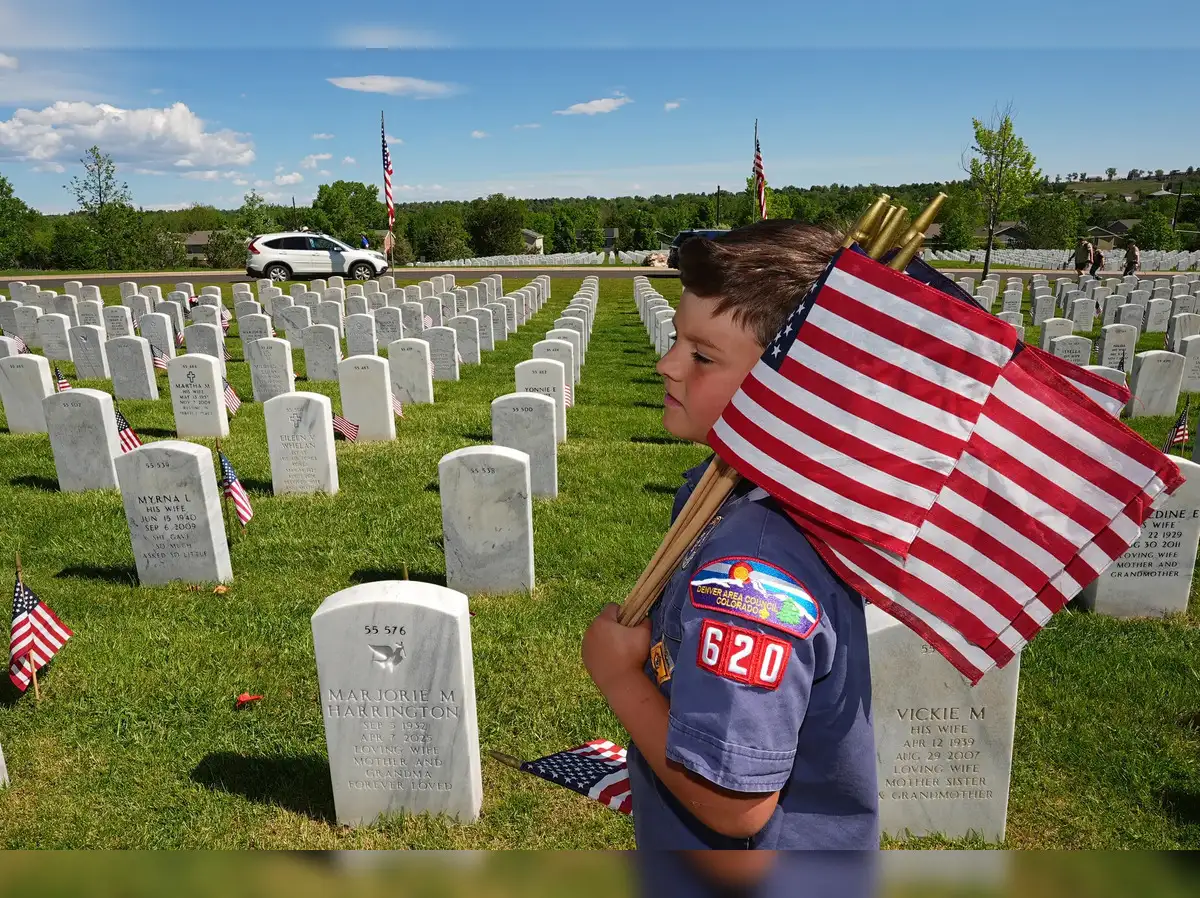
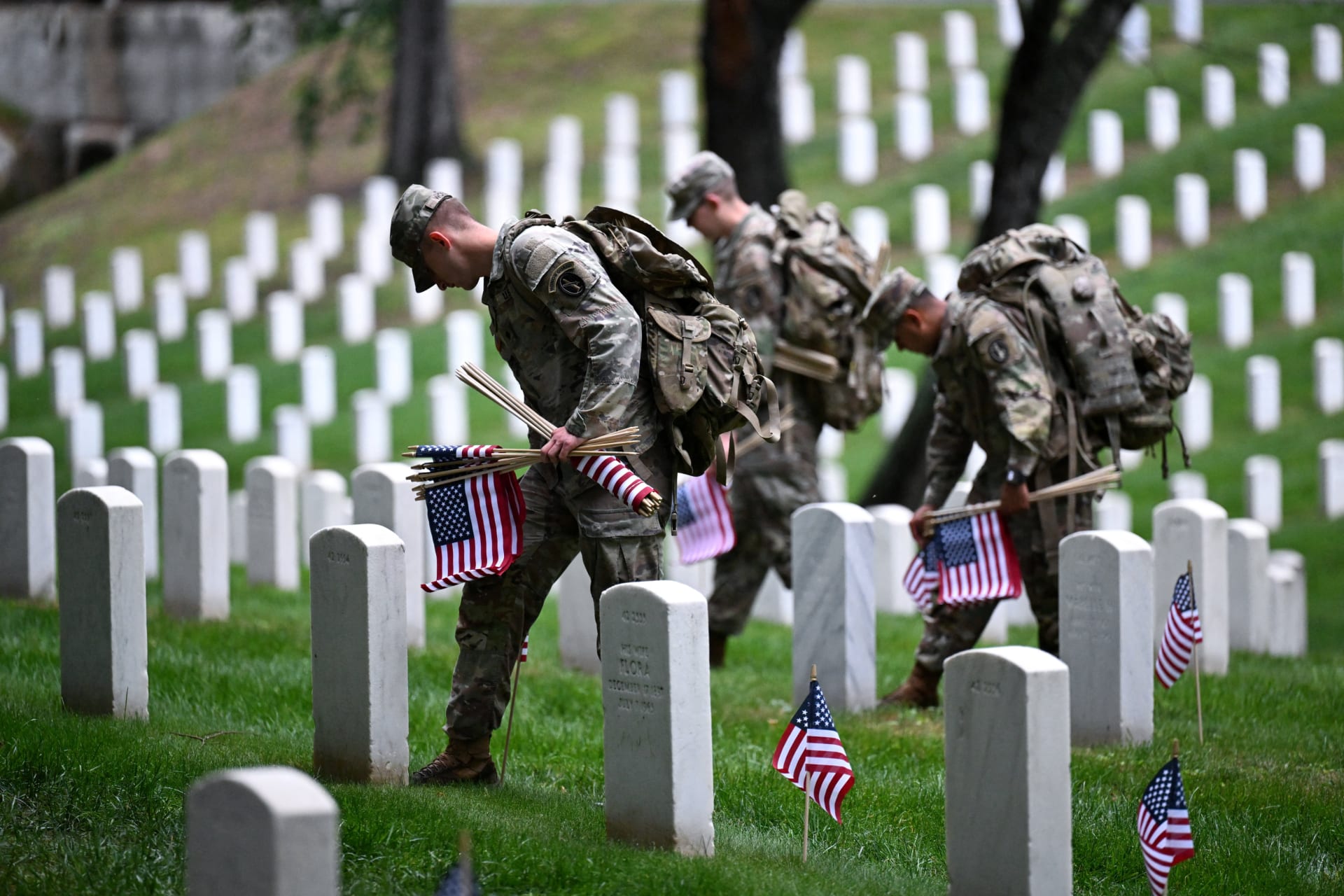
volunteering to decorate military graves with American flags at national cemeteries
-
attending memorial services, parades, and community events

 Modern Memorial Day Traditions
Although the primary purpose of the holiday is remembrance, Memorial Day weekend has also become a time for families and communities to gather and enjoy the unofficial start of summer. Many Americans:
-
have barbecues, picnics, and family gatherings
-
travel for short trips or weekend vacations
-
attend sports games or summer events
Wearing white between Memorial Day and Labor Day was once a widely followed tradition in the United States. This custom began as a way to stay cool in hot weather and as a sign of wealth and social status among upper-class families, though this is much less common today.
Public Life on Memorial Day
Memorial Day is a federal holiday, which means:
-
Schools, non-essential government offices, and many businesses are closed.
-
Public transportation often operates on a reduced or holiday schedule.
-
Highways and airports tend to experience increased traffic.
-
Most retail stores stay open, and Memorial Day sales have become a significant part of the weekend.
Symbols of Memorial Day
- The Red Poppy: This flower became a symbol of remembrance after World War I, inspired by the poem “In Flanders Fields” by poet and soldier John McCrae. People often wear or display red poppies to honor fallen soldiers, and the American Legion distributes them every Memorial Day.
- The American Flag: On Memorial Day, the flag is lowered to half-staff from sunrise until noon and then raised to full-staff for the remainder of the day. This process symbolizes mourning in the morning and a commitment to continue the fight for freedom in the afternoon. The flag’s colors—red for bravery, white for purity, and blue for perseverance—carry deep meaning on this day of reflection.
MEMORIAL DAY
Each year in the United States, Americans observe the Federal holiday, Memorial Day, the last Monday in May. It honors and remembers all men and women who have died while serving in the United States Armed Forces.
MemorialDay
Traditionally on Memorial Day, the flag of the United States of America is raised briskly to the top of the staff then solemnly lowered to the half-staff position where it remains until noon. At noon, it is then raised to full-staff for the remainder of the day.
When the flag is at half-staff, the position is in remembrance of the more than one million men and women who gave their lives for their country. Raising the flag at noon signifies the nation lives, that the country is resolved not to let their sacrifice be in vain but to rise up in their honor and continue to fight for liberty and justice for all.
HOW TO OBSERVE Memorial Day
Attend Memorial Day services in your community. In your own way, pay tribute in remembrance of service members who have died while serving. Visit a veterans' cemetery to honor those who've impacted your life. Use #MemorialDay to post on social media.

MEMORIAL DAY HISTORY
Honoring the men and women who have died while serving in the military, communities, individuals, and organizations have kept Memorial Day in various forms in the United States since the end of the Civil War. General John Logan first called for a nationwide day of remembrance on May 5, 1868. The observance was called Decoration Day, and it was observed on May 30th, 1868.
Decoration Day
General James Garfield spoke at Arlington National Cemetery with Generals Grant, Howard, Logan, Pane, Wool, and Hancock in attendance. Volunteers also decorated the graves of 20,000 Union and Confederate soldiers.
Across the country, humble tributes occurred on that first Decoration Day. Just outside Fort Stevens near Washington, D.C., there was a small cemetery where 40 soldiers were buried, one of whom belonged to a widow from Northern Vermont. He was one of three sons she lost to the war. On Decoration Day, she went to the cemetery carrying 40 wreaths for 40 graves.
Someone placed a laurel wreath upon the head of a Lincoln statue at City Hall, Washington, D.C.
In Cincinnati, Hamilton and Dayton Railroads transported passengers to the Spring Grove Cemetery. As a tribute, communities displayed flags at half-mast along the routes. More volunteers placed floral wreaths on the soldiers' graves, and speeches were made. Many of the first Decoration Days recognized only the Union soldiers. However, other events included the Confederate soldiers as well. Over time, the day grew to include all those soldiers lost during the conflict.
Decoration Day gradually became known as Memorial Day and now honors all U.S. service members who have died during a military conflict. Memorial Day continued to be observed on May 30th for many years. Then, in 1968, Congress passed the Uniform Monday Holiday Act of 1968. Since 1971, Memorial Day has been observed the last Monday of May.
Posted on 2026/05/26 08:56 AM